
Is Ramayana Real History?
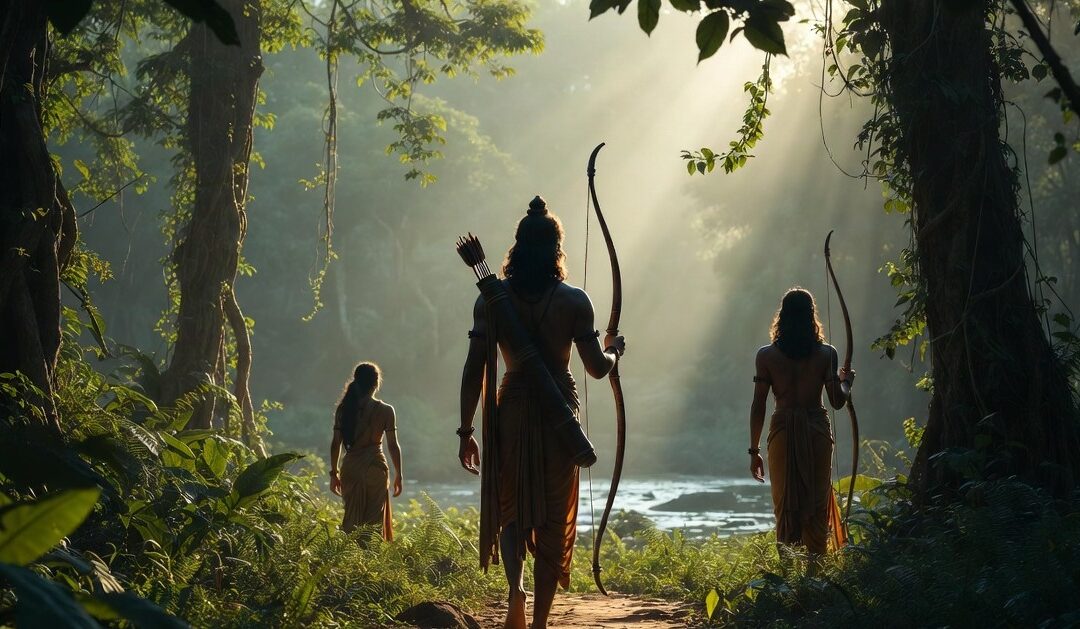
Imagine a young prince standing at the edge of a vast forest, his heart heavy yet resolute. He has just left behind the comforts of a golden palace, not out of anger, but out of pure love and duty for his father’s word. This is not a fairy tale. This is the opening chapter of one of humanity’s greatest stories—the Ramayana.
For millions across the world, the Ramayana is far more than an ancient epic. It is a living guide to life, a mirror reflecting the eternal battle between dharma (righteousness) and adharma (unrighteousness), and a profound reminder that even in the darkest times, light—both inner and outer—prevails. But what is the reality behind this timeless tale? Is it pure myth, historical memory woven with symbolism, or something deeper that transcends both? Let us journey together, like curious children discovering a hidden treasure, while uncovering layers that even seasoned seekers find awe-inspiring.
The Scriptural Foundation: Valmiki’s Gift to the World
The core of the Ramayana comes from Adi Kavi (the first poet) Sage Valmiki. Tradition holds that Bhagwan Brahma himself inspired Valmiki to compose this epic in beautiful Sanskrit shlokas after the sage witnessed a hunter killing a krauncha bird. From that moment of sorrow sprang the first shloka, and eventually, the 24,000-verse poem divided into seven Kandas (books): Balakanda, Ayodhyakanda, Aranyakanda, Kishkindhakanda, Sundarakanda, Yuddhakanda, and Uttarakanda.
Valmiki Ramayana presents Bhagwan Rama as the seventh avatar of Bhagwan Vishnu, born in the Treta Yuga to restore cosmic balance. The story unfolds in the kingdom of Kosala, with Ayodhya as its prosperous capital. Key events include:
- Rama’s birth and childhood training under Sage Vishwamitra.
- His marriage to Maa Sita, daughter of King Janaka of Mithila.
- The exile triggered by Queen Kaikeyi’s boons.
- The abduction of Sita by Ravana, the learned yet arrogant king of Lanka.
- Rama’s alliance with vanaras (monkey-like warriors) led by Bhagwan Hanuman.
- The epic bridge (Ram Setu) to Lanka.
- The fierce battle culminating in Ravana’s defeat.
- Rama’s return to Ayodhya, celebrated with lights—origin of Diwali.
These events are not isolated. The Ramayana connects deeply with other scriptures. The Mahabharata references Rama’s story multiple times, positioning it as an earlier Itihasa (history). Puranas like the Vishnu Purana and Skanda Purana expand on characters and events. Vedic hymns mention elements of the Ikshvaku dynasty, to which Rama belonged. This cross-referencing gives the narrative a rich, layered authenticity rooted in India’s ancient oral and written traditions.
Historical and Geographical Reality: Places That Still Whisper the Story
Many locations described in the Ramayana remain identifiable today, offering a tangible link to the past. Ayodhya, the birthplace of Bhagwan Rama, has archaeological layers showing ancient habitation, including Northern Black Polished Ware from around the 7th century BCE onward, consistent with urban centers of that era. Excavations reveal continuous settlement, aligning with descriptions of a thriving, river-side city along the Sarayu.
Other sites include:
- Chitrakoot — where Rama, Sita, and Lakshmana spent part of their exile.
- Panchavati (near modern Nashik) — site of Sita’s abduction.
- Kishkindha — believed to be in the Hampi region of Karnataka, with rocky landscapes matching the vanara kingdom.
- Rameshwaram — where the bridge to Lanka began.
- Sri Lanka — with traditions linking certain hills and caves to Ravana’s fortress.
Scholars note over 300 geographical references that match real locations across India and beyond. Rivers like the Ganga, Yamuna, and Godavari appear exactly as described. While direct artifacts proving every event (like a specific arrow or chariot) are understandably scarce after millennia, the consistency of place names, routes, and cultural memory strongly suggests the epic preserves historical kernels amplified through poetic and devotional storytelling.
Astronomical references add another fascinating layer. Valmiki describes planetary positions, nakshatras, and eclipses at key moments—Rama’s birth on Chaitra Shukla Navami with specific exalted planets, for instance. Researchers using planetarium software have proposed dates ranging from around 5100 BCE to earlier timelines, depending on interpretive models. These calculations, while debated, demonstrate the precision of ancient Indian astronomy and the text’s internal consistency. Some studies link observations to geological events or seasonal shifts, reinforcing that the Ramayana encodes real observational data rather than random fiction.
Also read: How Krishna’s Glories Can Transform Your Daily Life Forever
Ancient Stories Within the Story: Illustrating Timeless Truths
The Ramayana is a treasure trove of embedded tales that illuminate dharma. One moving example is the story of Shabari, an elderly tribal woman who waited her entire life for Rama. She tasted each berry to ensure it was sweet before offering it to Him. Rama accepted her humble offering with pure love, teaching that devotion (bhakti) matters more than ritual or status.
Another lesser-known gem involves the squirrel during the building of Ram Setu. While mighty vanaras hurled boulders, a tiny squirrel rolled in sand and shook it onto the bridge. When Bhagwan Rama gently stroked its back with His fingers—leaving permanent marks—the story reminds us that even the smallest sincere effort finds divine recognition. No contribution to dharma is insignificant.
Jatayu, the noble vulture, sacrificed his life trying to rescue Sita from Ravana. Rama performed his last rites with royal honor, showing respect transcends species or social hierarchy. These anecdotes, drawn from Puranic expansions and Valmiki’s verses, make abstract concepts like karma and cosmic order feel intimate and human.
Significance in Modern Life: Practical Wisdom for Today
In our fast-paced world of deadlines, social media pressures, and moral dilemmas, the Ramayana offers clear, actionable guidance:
- Dharma as Compass — Rama chose 14 years of forest exile over kingship to honor his father’s promise. Today, this translates to integrity at work or in relationships—keeping commitments even when inconvenient.
- Family Harmony — Lakshmana’s unwavering loyalty, Bharata’s refusal to take the throne, and Rama’s respect for all mothers teach balanced relationships. Parents can draw lessons on raising children with values; siblings learn selfless support.
- Devotion and Humility — Bhagwan Hanuman’s strength lay not just in physical power but in complete surrender to Rama. In daily life, this means approaching challenges with focused service rather than ego.
- Resilience in Adversity — Sita’s purity and courage in captivity, Rama’s strategic patience—these inspire us during personal “exiles” like job loss, illness, or heartbreak.
- Victory of Good — The burning of Ravana’s effigies on Dussehra symbolizes letting go of inner vices—anger, greed, arrogance.
Practical tips include reading or listening to one chapter daily, discussing moral dilemmas with family using Ramayana parallels, or practicing simple mindfulness: before any decision, ask, “What would align with dharma here?”
Spiritually, the epic awakens awareness of the divine within. Rama as Maryada Purushottam (ideal man) shows divinity expresses through perfect humanity—calm, just, compassionate. Scientifically, studies suggest storytelling traditions like Ramayana recitation reduce stress and foster empathy, while festivals promote community bonding and seasonal well-being.
Also read: The Ultimate Guide to Chanting Hanuman Chalisa Daily
Rituals, Mantras, and Celebrations: Living the Ramayana
Dussehra (Vijayadashami) marks Rama’s victory over Ravana. In northern India, grand Ramlila performances reenact the epic, ending with massive effigy burnings. Southern regions emphasize Durga’s triumph too, blending traditions. Diwali celebrates Rama’s return to Ayodhya—homes glow with diyas, symbolizing inner light dispelling darkness.
Common mantras include the Rama Raksha Stotra for protection and the simple yet powerful “Shri Ram Jai Ram Jai Jai Ram”. Many chant the Hanuman Chalisa for strength and courage.
Do’s:
- Read or hear the Ramayana with reverence, especially during festivals.
- Practice truthfulness and kindness.
- Offer service to elders and the needy.
Don’ts:
- Avoid speaking ill of others (Ravana’s downfall began with desire and ego).
- Refrain from hasty judgments (Rama’s later test of Sita teaches caution in public perception versus private truth).
Regional variations enrich the tapestry: In Southeast Asia (Thailand’s Ramakien, Indonesia’s Kakawin Ramayana), the story adapts with local flavors while retaining core values. Global celebrations see diaspora communities organizing Ramlila or virtual recitations, spreading harmony worldwide.
Benefits: Spiritual, Everyday, and Cosmic
Engaging with the Ramayana brings multifaceted gifts. Spiritually, it nurtures bhakti, sharpens discernment between right and wrong, and supports meditation on divine qualities. Everyday benefits include improved focus (through disciplined reading), stronger family bonds, and ethical decision-making that reduces regret.
On a deeper level, it connects us to rita (cosmic order). Rama’s life illustrates karma’s workings—actions bear fruit, yet grace and effort can transform destiny. Lesser-known insights reveal Rama’s story as a metaphor for the soul’s journey: exile as worldly wandering, battle as inner conquest, and return as self-realization.
An Uplifting Spiritual Message
The true reality of the Ramayana is this: It is not merely about what happened thousands of years ago in ancient Bharat. It is about what can happen within each of us right now. Bhagwan Rama teaches that every human possesses the potential to live with unshakeable righteousness. Maa Sita embodies unwavering purity. Bhagwan Hanuman shows that devotion turns ordinary beings into heroes. Even Ravana reminds us that great knowledge without humility leads to ruin.
In a world seeking peace amid chaos, the Ramayana whispers: Light a diya in your heart. Bridge the gaps between people with love and effort. Stand for truth, serve selflessly, and trust that dharma ultimately triumphs. This wisdom knows no borders, no age, no faith—it belongs to all who yearn for harmony.
May the timeless tale of Bhagwan Rama inspire you to write your own chapter of goodness, one thoughtful action at a time. As the lights of Diwali glow, remember: The greatest victory is the one won over our inner Ravana.
Support us by purchasing from our Affiliate Links:
Hanuman Chalisa by Shubha Vilas | Experience the Power and Blessings of Lord Hanuman