
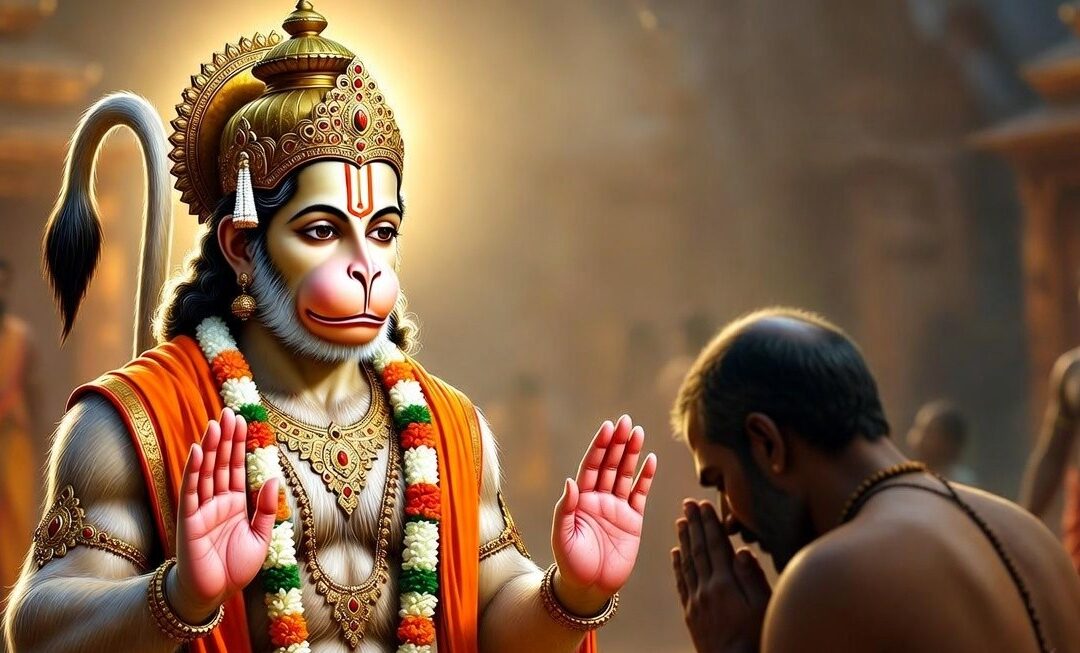
This ONE Hanuman Mantra Removes Every Pain, Obstacle and Suffering
Imagine you’re standing at the edge of a vast ocean, waves crashing against the shore, symbolizing the endless challenges life throws at you. You’re feeling overwhelmed—stuck in a job that drains your spirit, facing repeated failures in your dreams, or grappling with deep emotional pain from loss, fear, or anxiety that keeps you up at night. In today’s fast-paced world, where stress seems like an unwelcome companion, many of us feel blocked, as if invisible forces are holding us back. But what if there was a simple, ancient key to unlock inner strength, dissolve those barriers, and bring peace? Enter Bhagwan Hanuman, the embodiment of unwavering courage, selfless devotion, and boundless power. As the devoted servant of Bhagwan Rama, Hanuman ji teaches us that true protection comes from within, fueled by faith. And at the heart of this divine shield is one powerful mantra—the Hanuman Chalisa—that has helped countless devotees overcome pain, obstacles, and suffering for centuries. Let’s dive into this timeless wisdom and discover how it can transform your life, just like it has for generations.
What Is This “One Hanuman Mantra”?
Let’s start by understanding what this “one Hanuman mantra” truly is. The Hanuman Chalisa isn’t just any chant; it’s a beautiful hymn of 40 verses (chalisa means “forty” in Hindi) dedicated to praising Bhagwan Hanuman’s qualities and deeds. Composed in the 16th century by the revered saint-poet Goswami Tulsidas, it’s written in Awadhi, a simple dialect of Hindi, making it accessible to everyone, from scholars to everyday folks. Tulsidas ji, a devoted follower of Bhagwan Rama, is said to have penned this masterpiece during a time of personal trial. Legend has it that he was imprisoned by the Mughal emperor Akbar on false charges. In his cell, Tulsidas ji turned to Hanuman ji for help and composed these 40 verses over 40 days. Miraculously, an army of monkeys invaded the city, causing chaos until the emperor released him, recognizing the divine intervention.
This Chalisa draws from ancient scriptures like the Ramayana, where Hanuman ji’s exploits are vividly described. In homes and temples across Bharat (India) and beyond, it’s recited during times of crisis, gratitude, or daily devotion. Think of it as a poetic prayer that invokes Hanuman ji’s grace—his strength to leap across oceans, his wisdom to solve impossible problems, and his devotion that knows no bounds. Traditionally, it’s believed to be so potent that chanting it can remove even the deepest sufferings, much like how Hanuman ji brought the life-giving Sanjeevani herb to save Bhagwan Lakshmana in the Ramayana.
How This Mantra Removes Obstacles and Suffering
Now, you might wonder: how does a simple chant like the Hanuman Chalisa actually work its magic? Let’s break it down, starting with its spiritual effects. In Hindu tradition, reciting the Chalisa awakens your inner shakti (divine energy) and invites Hanuman ji’s protection. It’s said to burn away negative karma—the accumulated effects of past actions that cause suffering—much like fire purifies gold. By surrendering your worries to Hanuman ji, you align with cosmic order, allowing dharma (righteous living) to guide you through life’s storms.
On a mental and emotional level, the rhythmic chanting calms the mind, reducing fear, anxiety, and overthinking. Picture this: when Hanuman ji faced the demon king Ravana’s army, he didn’t waver; his devotion to Bhagwan Rama gave him unshakeable confidence. Similarly, devotees report feeling a surge of hope and emotional stability after regular recitation, turning despair into determination. It boosts willpower, helping you push through failures with renewed vigor.
Energetically, the Chalisa acts as a shield against negative influences like drishti (evil eye) or harmful energies. It cleanses your aura, home, and mind, creating a positive vibration that repels obstacles. In stories from the Puranas, Hanuman ji is the guardian who protects devotees from subtle forces. Chanting invokes that same protective grace, making your environment harmonious and supportive.
Inner Psychology of Hanuman Bhakti
To go deeper, let’s explore the inner psychology behind devotion to Hanuman ji. In Sanatana Dharma, Hanuman represents the perfect archetype: a blend of immense strength (bala) and pure devotion (bhakti). He’s fearless in upholding dharma, yet humble in service—think of how he carried an entire mountain to save Lakshmana, without boasting. This innocence combined with power teaches us to replace self-doubt with surrender.
Psychologically, chanting the Chalisa transforms negative self-talk into sacred vibrations. Instead of “I’m alone and weak,” your mind shifts to “I am protected and supported by divine grace.” It’s like training a muscle: regular practice builds resilience, turning helplessness into empowered action. A lesser-known fact is that Hanuman ji once unknowingly fought Bhagwan Rama to protect a king, showing his unwavering commitment to duty—a reminder that true bhakti aligns us with karma’s flow, dissolving ego-driven suffering.
Also read: How Jnana Vijnana Yoga Leads to Ultimate Harmony and Liberation
When to Use This Hanuman Mantra
So, when should you turn to the Hanuman Chalisa? Life throws curveballs like health struggles—physical pain from illness or emotional wounds from loss. It’s ideal for legal or financial obstacles, where everything feels blocked despite your efforts. In family conflicts or relationship turbulence, it brings clarity and harmony. Before exams, interviews, or major decisions, chant it to invoke courage.
Signs you might benefit include feeling “attacked” from all sides, repeated failures, or heavy anxiety about the future. In the Ramayana, when Sita Maa was captive in Lanka, Hanuman ji’s leap across the ocean symbolized overcoming impossible barriers—a story that mirrors our own struggles. Use it then, and watch obstacles melt away.
How to Practice (Step-by-Step)
Practicing the Hanuman Chalisa is straightforward, like sharing a story with a dear friend. First, prepare: Bathe or freshen up to purify yourself. Find a clean, quiet space—perhaps facing east or north. Light a diya (lamp) with ghee or incense for a sacred atmosphere, though it’s optional.
Methods include chanting aloud with full focus, listening to a recording mindfully, or using a shorter mantra like “Om Hanumate Namah” if time is short. For a basic routine:
- Daily: Morning or evening, recite once.
- Intensive: 11, 21, or 108 times over 11 or 21 days.
- Use a mala (prayer beads) for japa to count repetitions.
Start slowly, pronouncing each word clearly, and let devotion flow naturally.
Do’s and Don’ts (Very Important Section)
To harness the full power, follow these guidelines respectfully:
Do’s:
- Practice with genuine faith, humility, and regularity—consistency amplifies its effects.
- Combine chanting with righteous actions (dharma), like helping others.
- Surrender your worries sincerely at Hanuman ji’s feet.
- Maintain a sattvic lifestyle: eat pure vegetarian food, avoid intoxicants, and cultivate positivity.
Don’ts:
- Don’t treat it as a “magic fix” without effort—true change comes from within.
- Avoid adharmic (unrighteous) actions while expecting protection; it won’t work against karma.
- Never use it to harm others—that invites negativity.
- Don’t replace professional help like medical or psychological care with chanting alone; it’s a complement.
Frequently Felt Experiences / Benefits
Devotees often share transformative experiences. After chanting, many feel lighter and calmer, as if a weight has lifted. Sudden clarity emerges on next steps, obstacles clear smoothly, and sleep improves with fewer nightmares—a sense of divine protection envelops them.
Long-term benefits include stronger faith, resilience against life’s ups and downs, and a deeper connection to Bhagwan Rama through Hanuman ji. Character transforms: you become more disciplined, fearless, and compassionate. Scientifically, the rhythmic chant harmonizes breath and calms the brain, reducing stress. Regionally, in North India, it’s chanted during Hanuman Jayanti with grand processions; globally, diaspora communities celebrate it in temples, blending traditions.
How This Fits into Sanatana Dharma
In the vast tapestry of Sanatana Dharma (eternal righteousness), Hanuman ji is the ideal sevak (servant) of Bhagwan Rama, guarding dharma and the devotee’s path. The Chalisa acts as a bridge to your Ishta Devata (chosen deity), harmonizing with karma by purifying past actions through bhakti. It complements other practices like puja, yoga, meditation, or satsang (spiritual gatherings), emphasizing universal harmony.
A lesser-known connection: Hanuman ji’s devotion mirrors the Bhagavad Gita’s teachings on selfless action, where surrendering to the divine dissolves suffering. In cosmic order, he represents the wind element (Vayu putra), balancing energies for spiritual awakening.
Closing Spiritual Message
From the depths of suffering emerges true strength—pain and obstacles are gentle reminders to remember Hanuman ji, who turns trials into triumphs. This mantra isn’t just words; it’s a lifelong companion, guiding you through every phase with courage, protection, and clarity. Why not take a small sankalpa (resolve) today? For the next 21 days, chant or listen to the Hanuman Chalisa daily, inviting its timeless wisdom into your heart. In doing so, you’ll discover the peace that comes from universal harmony, where dharma prevails and love conquers all. May Hanuman ji’s grace light your path forever.
Support us by purchasing from our Affiliate Links:
Hanuman Chalisa by Shubha Vilas | Experience the Power and Blessings of Lord Hanuman