
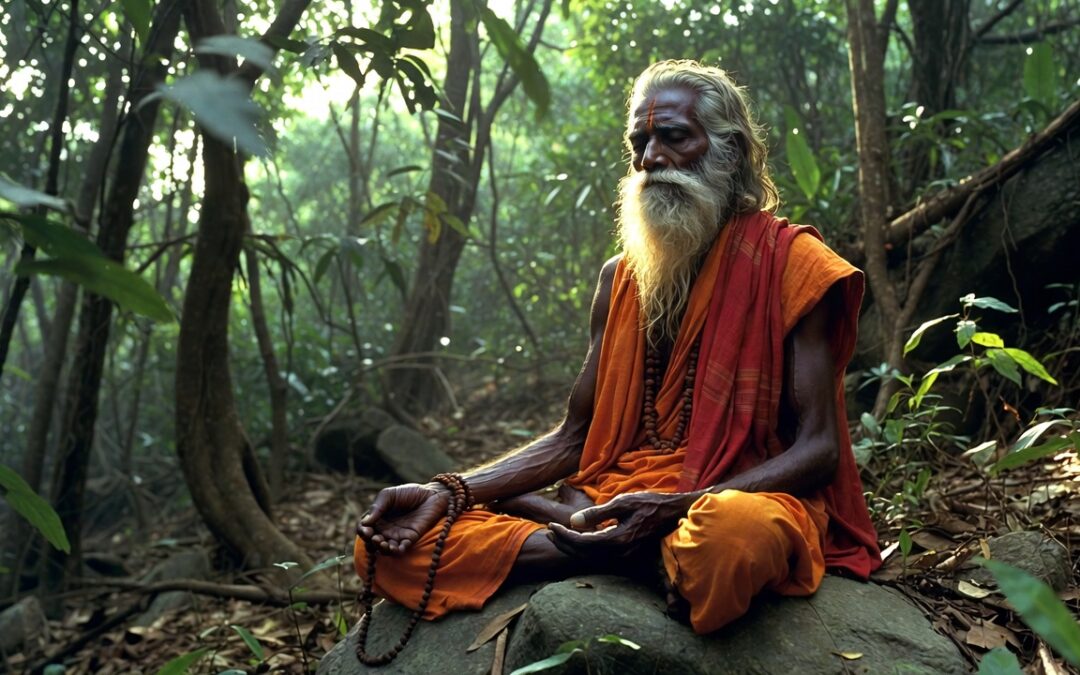
Dhyana Yoga – The Yoga of Meditation
Imagine sitting by a quiet river at dawn, the world still asleep around you. The gentle flow of water mirrors the calm settling in your mind as thoughts drift away like leaves on the current. This isn’t just a peaceful moment—it’s the essence of Dhyana Yoga, the ancient path of meditation that has guided seekers for thousands of years. In our fast-paced world, where notifications buzz and schedules overflow, Dhyana Yoga offers a timeless anchor. It’s like discovering a hidden garden within yourself, where peace blooms amid the chaos. Whether you’re a busy parent juggling work and family, a student facing exam pressures, or someone simply seeking deeper meaning, this practice whispers an invitation: come, sit, and discover the vastness inside.
Dhyana Yoga isn’t about escaping life; it’s about embracing it fully. It’s the seventh limb in the eightfold path of yoga, a bridge between focused concentration and ultimate union with the divine. But let’s start from the beginning, like telling a story to a wide-eyed child. What if I told you that this practice, rooted in ancient wisdom, can transform how you handle stress, make decisions, and connect with others? Let’s journey through its depths together, uncovering its secrets step by step.
The Ancient Roots: From Vedas to the Battlefield
Picture the misty dawn of civilization in ancient India, where sages sat under banyan trees, pondering the mysteries of existence. Dhyana Yoga finds its earliest whispers in the Vedas, the oldest sacred texts of Hinduism. These hymns speak of “dhi,” a visionary insight linked to Maa Saraswati, the embodiment of knowledge and creativity. It’s as if the ancients saw meditation not as silence, but as a creative force, a way to tap into the cosmic rhythm.
Fast forward to the Upanishads, those profound dialogues between teachers and students. Here, Dhyana evolves into deep contemplation of the Atman, the inner self. In the Chandogya Upanishad, it’s said that even the earth, heavens, and mountains “meditate as it were,” suggesting that meditation is the natural state of all things—a quiet abiding in the present. Explain it to a beginner: think of it like staring at a starry sky until the stars seem to speak. That’s the shift from scattered thoughts to profound awareness.
But the crown jewel is Chapter 6 of the Bhagavad Gita, aptly called Dhyana Yoga. On the battlefield of Kurukshetra, Bhagwan Krishna teaches Arjuna the art of meditation amid turmoil. “Establish yourself in yoga,” Krishna says, “perform your duties without attachment.” He describes the yogi as one who sits in a clean spot, on a firm seat, holding the body steady, gazing at the tip of the nose, and focusing the mind on the divine. It’s practical advice: eat moderately, sleep enough, and practice regularly. Krishna compares the mind to a flickering flame in the wind—steady it through discipline, and it becomes a beacon.
Then there’s Sage Patanjali’s Yoga Sutras, the blueprint for yoga. Dhyana is the seventh limb, following Dharana (concentration) and leading to Samadhi (absorption). Patanjali defines it as an unbroken flow of awareness on a single point. It’s like a river merging with the ocean—effortless, immersive. These texts aren’t dusty relics; they’re living guides, showing how meditation aligns us with Dharma, the cosmic order, balancing Karma’s wheel and awakening the spirit.
Also read: How Karma Sannyasa Yoga Transforms Your Life
Tales from the Ancients: Myths That Illuminate Dhyana
Hindu mythology brims with stories that make Dhyana come alive, like parables shared around a fire. Take Bhagwan Shiva, the ultimate yogi. Seated on Mount Kailash, eyes closed in profound stillness, he embodies Dhyana. Legend tells of how he meditated so deeply that the universe’s dance unfolded before him—past, present, and future in harmony. When disturbed by Kama, the god of desire, Shiva’s third eye opened in a flash of insight, reducing distractions to ash. It’s a reminder: meditation burns away illusions, revealing truth.
Another gem is from the Mahabharata. Arjuna, the warrior prince, practiced Dhyana to sharpen his focus. In one tale, his guru Dronacharya tested the princes’ concentration by asking them to aim at a bird’s eye. While others saw the tree or sky, Arjuna saw only the eye. This laser-like focus, honed through meditation, mirrors Dhyana’s power to cut through life’s noise.
Or consider the sage Vishwamitra, who through intense Dhyana created a parallel heaven for King Trishanku. It’s a lesser-known fact that his meditation tapped into cosmic energies, bending reality. These myths aren’t just entertaining—they illustrate how Dhyana connects us to the divine order, turning ordinary beings into vessels of extraordinary wisdom.
Why Dhyana Matters Today: Relevance in a Modern World
In our era of endless scrolling and burnout, Dhyana Yoga feels like a lifeline. It’s not about renouncing the world but engaging with it mindfully. Think of it as upgrading your mental software—clearing bugs for smoother running. Modern science echoes ancient wisdom: studies show meditation reduces stress hormones, boosts brain gray matter, and enhances emotional regulation. Spiritually, it awakens Kundalini energy, aligning chakras for harmony.
Practically, apply it to daily life. Stuck in traffic? Breathe deeply, focus on your breath— that’s mini-Dhyana. Facing a tough decision? Meditate to tap into intuition, balancing Karma’s lessons. It fosters Dharma by encouraging ethical living, free from attachment.
A real-life example: Mahatma Gandhi, inspired by the Gita, practiced Dhyana amid India’s freedom struggle. Amid chaos, he meditated daily, finding clarity for non-violent resistance. His focus turned personal peace into global change, showing how Dhyana empowers real-world action.
How to Practice: Rituals, Mantras, and Tips
Ready to try? Start simple. Find a quiet spot at dawn or dusk—nature’s rhythm aids focus. Sit in Padmasana or Sukhasana, spine straight like a mountain. Place a Kusha grass mat or deer skin for insulation, as ancient texts suggest.
Do’s:
- Eat sattvic food: fruits, veggies, nuts—light and pure.
- Practice Pranayama first: alternate nostril breathing calms the mind.
- Use a mantra like “Om” or “So Hum”—repeat silently.
- Meditate 20-30 minutes daily, building gradually.
Don’ts:
- Avoid heavy meals before practice—they dull the mind.
- Don’t force concentration; gently redirect wandering thoughts.
- Skip if agitated; calm with asanas first.
- Never meditate in unclean spaces—purity matters.
Rituals vary: in South India, some incorporate temple visits with Dhyana on Bhagwan Vishnu. In the North, it’s often linked to Shiva worship. Globally, International Yoga Day celebrates it, blending traditions.
Also read: How Jnana Karma Sannyasa Yoga Transforms Your Life
The Gifts of Dhyana: Benefits for Body, Mind, and Soul
Spiritually, Dhyana leads to self-realization, dissolving ego for union with Brahman. It’s the key to Moksha, breaking rebirth’s cycle.
Scientifically:
- Lowers blood pressure, improves immunity.
- Enhances focus, creativity—think clearer innovations.
- Reduces anxiety, depression—natural mood booster.
Everyday perks:
- Better relationships: mindful listening builds empathy.
- Productivity boost: focused mind tackles tasks efficiently.
- Inner peace: navigate life’s storms with equanimity.
Regional twists: In Kerala, it’s tied to Ayurvedic healing; in the Himalayas, to Tantric practices. Globally, mindfulness apps adapt it, making ancient wisdom accessible.
A Timeless Whisper: Embracing Universal Harmony
As we wrap this journey, remember Dhyana Yoga as a gentle call to your true self. In its stillness, find the dance of the cosmos—Dharma guiding, Karma teaching, awakening boundless joy. Let it ripple into your life, fostering peace that touches all. After all, in the words of the ancients, the universe meditates within you. Embrace it, and watch harmony unfold.
Support us by purchasing from our Affiliate Links: