
Why Upanishads Matter: Differences from Vedas, Puranas, and More
As a spiritual seeker or someone curious about ancient wisdom, have you ever wondered what lies at the heart of human existence? What is the ultimate reality beyond the hustle of daily life? In Hinduism, the Upanishads offer profound answers to these timeless questions. They guide us on a quest for the ultimate truth, helping us understand our place in the universe. In this blog, we’ll dive deep into the essence of the Upanishads, exploring their origins, teachings, and relevance today. Whether you’re new to Hindu philosophy or a seasoned explorer, this will be an enlightening journey. Let’s begin with some foundational context.
What Are the Upanishads?
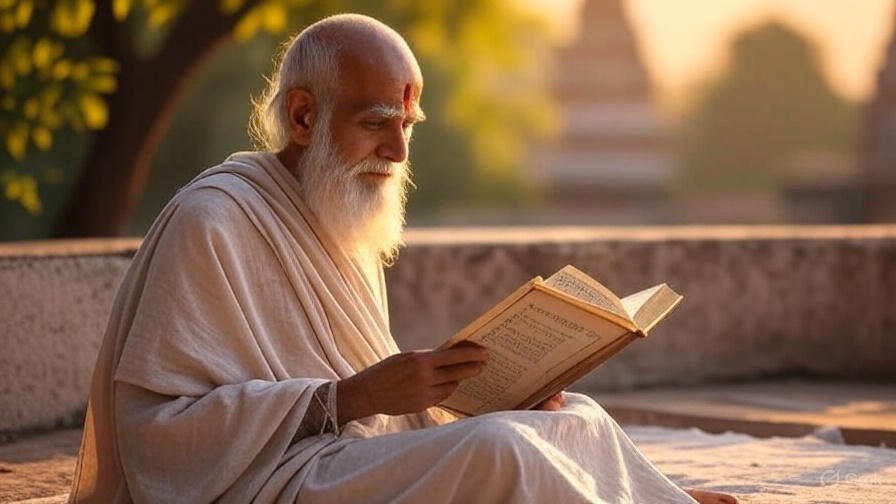
The word “Upanishad” comes from Sanskrit roots: “upa” (near), “ni” (down), and “shad” (to sit). It literally means “sitting down near,” referring to the ancient practice where disciples would sit close to their guru to receive secret, profound teachings. These texts are not just books; they are dialogues, poems, and meditations that capture the essence of spiritual inquiry.
The Upanishads form the concluding portions of the Vedas, the oldest sacred scriptures in Hinduism. There are over 200 Upanishads, but the principal ones—about 10 to 13—are considered the most important. These include the Isha, Kena, Katha, Prashna, Mundaka, Mandukya, Taittiriya, Aitareya, Chandogya, and Brihadaranyaka Upanishads. Composed between 800 BCE and 200 BCE, they shift focus from ritualistic practices to philosophical introspection. Instead of prescribing ceremonies, they ask big questions: Who am I? What is the universe made of? Is there a reality beyond what we see?
Differences Between Upanishads, Granths, Vedas, and Puranas
To appreciate the Upanishads fully, it’s helpful to distinguish them from other key Hindu texts. Hinduism’s vast literature can seem overwhelming, but each category serves a unique purpose.
- Vedas: These are the foundational scriptures, revealed to ancient sages (rishis) through divine insight. There are four Vedas: Rig Veda (hymns and praises to gods), Yajur Veda (ritual formulas), Sama Veda (musical chants), and Atharva Veda (spells and everyday wisdom). The Vedas emphasize karma (action) through rituals, sacrifices, and devotion to deities like Indra, Agni, and Varuna. They are more about external worship and maintaining cosmic order (dharma).
- Upanishads: As mentioned, these are the philosophical end-parts of the Vedas, often called Vedanta (“end of the Vedas”). While the Vedas focus on rituals (karma kanda), the Upanishads delve into jnana (knowledge) and the inner quest. They transcend gods and rituals, pointing to a formless, infinite reality.
- Puranas: These are later texts, compiled around 300-1500 CE, full of myths, legends, and stories. There are 18 major Puranas, like the Vishnu Purana, Shiva Purana, and Bhagavata Purana. They explain cosmology, genealogy of kings and gods, and moral lessons through tales of avatars like Rama and Krishna. Puranas make complex ideas accessible through storytelling, appealing to the masses, whereas Upanishads are more abstract and intellectual.
- Granths: This term is a bit broader. In Hinduism, “granth” means a sacred book or treatise. It often refers to epic granths like the Ramayana (by Valmiki) and Mahabharata (by Vyasa), which are Itihasas (historical narratives) blending history, philosophy, and devotion. The Bhagavad Gita, a part of the Mahabharata, is sometimes called a granth. In a wider sense, granths include Smritis (remembered texts) like Manusmriti (laws). Unlike the revelation-based Vedas and Upanishads, granths are authored by sages and focus on practical ethics, society, and bhakti (devotion). For context, in Sikhism, the Guru Granth Sahib is a central granth, but here we’re sticking to Hindu traditions.
In summary, Vedas lay the ritual foundation, Upanishads build the philosophical pinnacle, Puranas narrate the myths, and granths provide epic guidance for living.
Also read: The Power of Ahimsa in Sanatana Dharma – Lessons from Lord Krishna and Scriptures
What Can One Learn from the Upanishads and Why Are They Important in Hinduism?
The Upanishads teach that the ultimate truth is Brahman—the infinite, unchanging reality that pervades everything. They introduce concepts like Atman (the inner self or soul), which is identical to Brahman. Famous mahavakyas (great sayings) like “Tat Tvam Asi” (Thou art That), “Aham Brahmasmi” (I am Brahman), and “Ayam Atma Brahma” (This Self is Brahman) emphasize this unity.
From the Upanishads, one learns about the illusion of Maya (the world of appearances), the cycle of Samsara (birth and death), and Moksha (liberation) through self-realization. They promote Jnana Yoga (path of knowledge), encouraging meditation, inquiry, and detachment from material desires. Unlike dogmatic religions, the Upanishads invite personal exploration: “Neti Neti” (not this, not that) is a method to negate false identities and discover the true self.
In Hinduism, the Upanishads are crucial because they form the bedrock of Advaita Vedanta (non-dualism), influencing thinkers like Adi Shankara. They bridge ritualistic Brahmanism to introspective spirituality, inspiring yoga, meditation, and even modern mindfulness. Globally, they’ve impacted philosophers like Schopenhauer and Emerson, showing Hinduism’s universal appeal. In today’s stressful world, they remind us that true happiness comes from within, not external achievements.
Who Started the Upanishads?
The Upanishads weren’t “started” by a single person; they emerged organically from the Vedic tradition. Ancient rishis—seers like Yajnavalkya (Brihadaranyaka Upanishad), Uddalaka Aruni (Chandogya Upanishad), and Pippalada (Prashna Upanishad)—compiled these insights through divine revelation and deep meditation. Passed orally for centuries, they were later written down. No founder like in organized religions; instead, they reflect collective wisdom from forest-dwelling sages seeking truth beyond rituals.
Stories from Ancient India to Understand the Upanishads
Stories make abstract ideas relatable. Here are two classic tales from the Upanishads that illustrate the quest for ultimate truth.
First, the story of Nachiketa from the Katha Upanishad. Young Nachiketa, son of a sage, notices his father’s insincere offerings during a sacrifice. Questioning this, he asks to be given to Yama, the god of death, as a true gift. Yama tests Nachiketa with worldly temptations, but the boy insists on knowing what happens after death. Yama reveals: The soul is eternal, like fire in all flames. Good leads to liberation, evil to rebirth. This tale shows the courage needed for spiritual inquiry, emphasizing knowledge over material gains.
Second, from the Chandogya Upanishad, the story of Svetaketu and his father Uddalaka. Arrogant after Vedic studies, Svetaketu returns home. His father asks, “Do you know that by which all else is known?” Confused, Svetaketu learns through analogies: Like rivers merging into the ocean, all beings are one with Brahman. Uddalaka says, “Tat Tvam Asi”—you are that essence. Using examples like salt in water (invisible yet present), he teaches unity. This story highlights humility and the realization that true knowledge dissolves ego.
These narratives aren’t just folklore; they embody the Upanishadic method of guru-shishya (teacher-student) dialogue, making profound truths accessible.
Delving Deeper: Core Teachings and Key Upanishads
Now, let’s explore the details. The Upanishads’ essence is the quest for Sat-Chit-Ananda (truth-consciousness-bliss), the nature of Brahman.
Start with the Isha Upanishad: It opens with “The whole universe is pervaded by the Lord,” teaching renunciation amid enjoyment. It balances action and knowledge, saying detach from results to avoid bondage.
The Kena Upanishad asks, “By whom (kena) is the mind directed?” It reveals Brahman as the power behind senses, beyond comprehension yet knowable through intuition.
The Katha Upanishad, via Nachiketa’s story, contrasts the paths of Preyas (pleasure) and Shreyas (good). It describes the self as a charioteer controlling the body (chariot), senses (horses), and mind (reins). Yoga is key to realizing the immortal Atman.
Prashna Upanishad answers six questions on creation, prana (life force), and the states of consciousness: waking, dreaming, deep sleep, and Turiya (transcendent).
Mundaka Upanishad classifies knowledge into lower (rituals, sciences) and higher (Brahman). It uses the analogy of a spider weaving its web to explain creation from the self.
Mandukya Upanishad, the shortest, analyzes “Om” as representing all states of consciousness, leading to non-dual awareness.
Taittiriya Upanishad outlines five sheaths (koshas) covering the self: physical, vital, mental, intellectual, and bliss. True joy is in the innermost.
Aitareya Upanishad discusses creation from the cosmic self, linking microcosm (individual) to macrocosm (universe).
The lengthy Chandogya and Brihadaranyaka Upanishads expand on these. Chandogya uses metaphors like bees making honey from various flowers to show unity in diversity. Brihadaranyaka features Yajnavalkya debating, declaring the self as the light within.
Central to all is the rejection of duality. The world seems separate due to Maya, but meditation and self-inquiry reveal oneness. Practices like Neti Neti help peel away illusions.
Also read: Why Bhagavad Gita is the Song of God – A Spiritual Deep Dive
Additional Insights: Influence and Modern Relevance
Something important I must add: The Upanishads’ impact extends beyond Hinduism. They influenced Buddhism (via concepts like impermanence) and Jainism. In the West, Ralph Waldo Emerson called them “the highest philosophy,” inspiring Transcendentalism. Today, quantum physics echoes their ideas—physicists like Erwin Schrödinger drew from Vedanta, seeing parallels in wave-particle duality and non-dualism.
How to study them? Start with translations by Swami Vivekananda or Eknath Easwaran. Join satsangs (spiritual gatherings) or meditate on verses. Remember, they’re not for intellectual debate but transformation.
In a world of division, the Upanishads teach unity: All is one. This fosters compassion, reducing conflicts. For personal growth, they combat anxiety by shifting focus inward.
Final Words:
The Upanishads are a beacon in the quest for ultimate truth, guiding us from ignorance to enlightenment. They remind us that beneath the chaos, there’s eternal peace. As the Mundaka Upanishad says, “Truth alone triumphs.” May your journey with these texts bring clarity and joy.
Support us by purchasing from our Affiliate Links: