
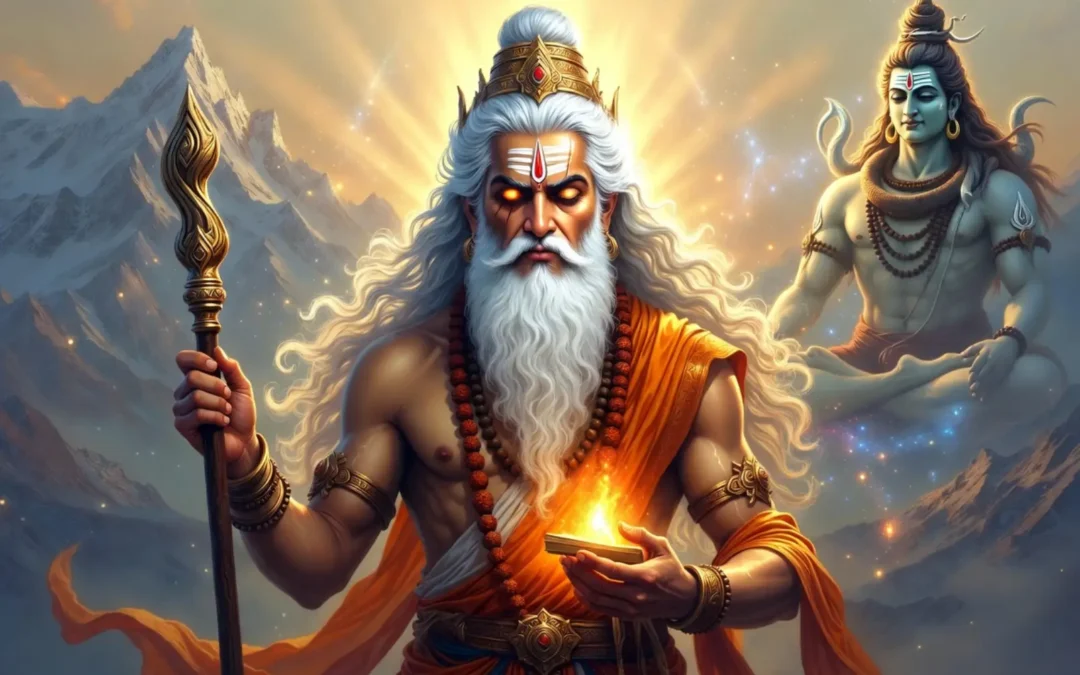
Unknown Story of Shukracharya: Guru of Asuras and Master of Sanjeevani Vidya
Imagine the thunderous clash of cosmic wars echoing across the three worlds. The Devas, shining with divine light, battle fiercely against the Asuras, who seem unstoppable. Every time a warrior from the Asura side falls lifeless on the battlefield, he rises again, stronger and ready to fight. The secret behind this miracle? The extraordinary Sanjeevani Vidya – the knowledge to revive the dead. And at the heart of it all stands Sage Shukracharya, the brilliant guru of the Asuras. His story is not just one of power and magic. It is a deeply human tale of loss, unbreakable devotion, wisdom born from pain, and the eternal dance of dharma that keeps the universe in balance.
You might wonder: How did a sage from the lineage of great rishis become the teacher of those often seen as forces of chaos? Why did Bhagwan Shiva himself get involved in his journey? And what hidden lessons does this “unknown” chapter of Hindu mythology hold for us today, in a world full of its own battles – personal, professional, and spiritual? Drawing from ancient texts like the Shiva Purana, Skanda Purana, Padma Purana, Mahabharata, and Shukra Niti, let’s walk through his life step by step. We will explore his origins, the dramatic stories that shaped him, his incredible powers, and how his wisdom can guide us toward peace and harmony even in modern chaos.
Origins: Son of Bhrigu Maharishi and the Seeds of Destiny
Sage Shukracharya was born as the son of the great Maharishi Bhrigu, one of the mind-born sons of Bhagwan Brahma, and his wife Kavyamata. From birth, he carried the brilliance of his father’s lineage – deep knowledge of the Vedas, intense focus, and a heart devoted to truth. But destiny had bigger plans. While Bhagwan Brihaspati guided the Devas with wisdom and strategy, young Shukracharya was destined to become the guru of the Asuras. This was not out of hatred for the Devas, but part of the cosmic order. The universe needs balance: light and shadow, creation and challenge, so that dharma can evolve through constant testing.
Early in life, Shukracharya showed unmatched dedication to spiritual growth. He understood that true power comes not from force, but from tapasya – the fire of disciplined penance. Little did he know that his path would involve heart-wrenching loss, divine tests, and a gift that could bend the rules of life and death itself.
The Tragic Loss: His Mother’s Death and the Curse on Bhagwan Vishnu
One of the most painful chapters in Shukracharya’s story begins with his mother, Kavyamata. In a fierce battle between Devas and Asuras, the defeated Asuras sought refuge in the ashram of Maharishi Bhrigu. Kavyamata, bound by her promise of protection, used her divine powers to hide them and even paralyzed the pursuing Devas. Indra, the king of Devas, panicked and prayed to Bhagwan Vishnu for help.
Bhagwan Vishnu, upholding dharma and the balance of the worlds, arrived and asked Kavyamata to step aside. When she refused, protecting the helpless Asuras as per her word, Bhagwan Vishnu, with a heavy heart, used his Sudarshana Chakra to sever her head. It was an act of cosmic necessity, yet it shattered the family. When Maharishi Bhrigu returned and saw his wife’s lifeless body, grief turned to fury. He cursed Bhagwan Vishnu: “You shall be born many times on earth, experiencing the pain of separation and human struggles.” This curse explains why Bhagwan Vishnu took avatars like Rama and Krishna – to fulfill dharma while bearing the weight of mortal life.
Shukracharya never forgot this tragedy. It planted a deep resolve in him to stand by the Asuras, not out of revenge, but to ensure their side of the cosmic balance had a fair chance. The incident taught him that even gods act within the laws of karma, and every action ripples through eternity. It also sparked his lifelong quest for knowledge that could overcome death itself.
Also read: Is Ramayana Real?
The Fierce Tapasya: Seeking Sanjeevani Vidya from Bhagwan Shiva
Driven by the need to protect his disciples and restore balance, Shukracharya undertook one of the most extreme penances in mythology. He went to the Himalayas and performed tapasya to Bhagwan Shiva for the Mrita Sanjeevani Vidya – the mantra that revives the dead. For a thousand years, he hung upside down over a smoking fire of husked rice, inhaling only its fumes. Some accounts say he stood on one toe or meditated without food or water, his body turning into a living flame of devotion.
Bhagwan Shiva, pleased by this unparalleled dedication, appeared before him. “O pure one,” Bhagwan Shiva said, “I grant you the hidden Mrita Sanjeevani Vidya, which even Brahma and Vishnu do not possess in this form.” This knowledge was not mere magic. It represented the power of compassion, renewal, and the understanding that death is not the end but a transition. Shukracharya emerged transformed, now equipped to serve as the true guardian of the Asuras.
Swallowed by Bhagwan Shiva: A Divine Test and the Birth of His Name
The story takes a dramatic turn during another Deva-Asura war. The Asuras, empowered by Shukracharya’s Sanjeevani Vidya, were winning. The Devas pleaded with Bhagwan Shiva to intervene so that dharma’s balance would not tip completely. Bhagwan Shiva ordered his loyal Nandi to bring Shukracharya before him. Without hesitation, Bhagwan Shiva swallowed him whole to prevent him from reviving the fallen Asuras mid-battle.
Inside Bhagwan Shiva’s stomach, Shukracharya saw the entire universe – the seven worlds, creation, destruction, past, and future unfolding at once. Instead of panic, he offered heartfelt prayers and stotras. Bhagwan Shiva, moved by this devotion, released him through his divine body fluid. Because he emerged from Shiva’s “shukra” (semen), he came to be known as Shukracharya. In some tellings, Bhagwan Shiva also reaffirmed or deepened the Sanjeevani knowledge during this time. This episode shows that even the greatest sages face tests from the divine, and surrender leads to greater wisdom.
The Mahabali and Vamana Episode: Loyalty, Warning, and a Lesson in Humility
Shukracharya’s role in the story of King Mahabali and Bhagwan Vishnu’s Vamana avatar highlights his unwavering loyalty and foresight. When the generous Asura king Mahabali performed a grand yajna and offered charity to all, Shukracharya recognized the dwarf Brahmin boy as Bhagwan Vishnu in disguise. “Do not grant him the three steps of land,” he warned. “This is a trick to humble your power.”
But Mahabali, bound by his word and dharma, refused to break his promise. In a desperate attempt to stop the ritual, Shukracharya took the form of a bee to block the water pot used for the vow. Bhagwan Vamana poked the pot with a blade of darbha grass, accidentally injuring Shukracharya’s eye. From then on, he is sometimes depicted as one-eyed – a mark of his sacrifice for his disciple’s honor. Yet, this event also led to Mahabali’s eternal blessing and rule over Sutala, showing how dharma prevails even when gurus and kings disagree.
Also read: How Krishna’s Glories Can Transform Your Daily Life Forever
Powers and Wisdom: Sanjeevani Vidya and the Shukra Niti
Shukracharya’s greatest gift was the Mrityunjaya (or Mrita Sanjeevani) Vidya, a mantra that revives the dead by invoking the life force itself. It is not about cheating death but understanding its temporary nature in the cycle of karma. In the famous Kacha-Devayani story from the Mahabharata, he even taught this vidya to Kacha (son of Brihaspati) when his daughter Devayani pleaded, showing compassion beyond rivalry.
Beyond this, Sage Shukracharya authored the Shukra Niti – an ancient treatise on statecraft, ethics, and leadership. It teaches kings (and modern leaders) how to rule with morality, balance power with justice, and avoid tyranny. Here are a few key principles from Shukra Niti that feel surprisingly relevant today:
- Dharma first: A ruler must prioritize truth, justice, and the welfare of people over personal gain.
- Humility in victory: Never boast; pride invites downfall.
- Wise counsel: Listen to advisors but decide with a clear, ethical mind.
- Balance in chaos: Use strength only when necessary; forgiveness can be more powerful.
- Long-term vision: Build institutions that outlast one lifetime.
These teachings connect directly to cosmic order – karma shapes outcomes, and ethical living brings harmony.
Modern Lessons: Humility, Ethics, and Finding Balance in Chaos
In today’s fast-paced world of competition, stress, and uncertainty, Shukracharya’s life offers practical wisdom. His mother’s death teaches us to accept that even painful events serve a larger purpose. His tapasya reminds us that real power comes from inner discipline – perhaps through daily meditation or mindful habits. The swallowing episode shows that surrender during tough times leads to breakthroughs. And his warning to Mahabali? It urges us to stay true to our word while practicing humility when challenged.
For leaders, entrepreneurs, or anyone in a position of influence, Shukra Niti suggests simple tips: Start meetings with ethical clarity. Practice gratitude to avoid arrogance. When facing “wars” at work or home, choose dharma over short-term wins. Spiritually, chanting the Maha Mrityunjaya Mantra (“Om Tryambakam Yajamahe…”) can bring protection, health, and renewal – a modern echo of Sanjeevani Vidya for overcoming life’s obstacles.
Benefits extend beyond the spiritual. Many find that aligning with Shukra’s energy (through Friday prayers or Venus-related remedies) improves relationships, creativity, and prosperity. Regional variations exist too: In South India, Shukra temples and Friday fasts are common, while global celebrations of Hindu festivals often highlight these stories in Katha sessions for young audiences worldwide.
Spiritual Significance: Patron of Venus and the Unbiased Seer
Shukracharya is more than a guru – he is the living embodiment of Shukra, the planet Venus. As one of the Navagrahas, he governs beauty, wealth, love, and harmony. Worshipping him on Fridays with mantras like “Om Shum Shukraya Namah” is believed to bring balance in these areas. Yet, he remains unbiased: He serves the Asuras not because they are “evil,” but to maintain cosmic equilibrium. The Devas need challenge to stay vigilant, and the Asuras need guidance to evolve.
This teaches us universal harmony: Every force in the universe has its role. Shukracharya’s life reminds us that knowledge and devotion transcend labels. He is the seer who sees beyond duality – a beacon for spiritual awakening.
In the end, the story of Sage Shukracharya leaves us with an uplifting message: Even in the midst of wars, loss, and tests, devotion to truth and dharma leads to renewal. Like the Sanjeevani Vidya that revives the fallen, his wisdom revives our spirits. It whispers that humility, ethical living, and inner balance can turn any chaos into cosmic harmony. May we all carry a spark of this ancient light in our hearts, walking the path of peace, understanding, and eternal growth.