
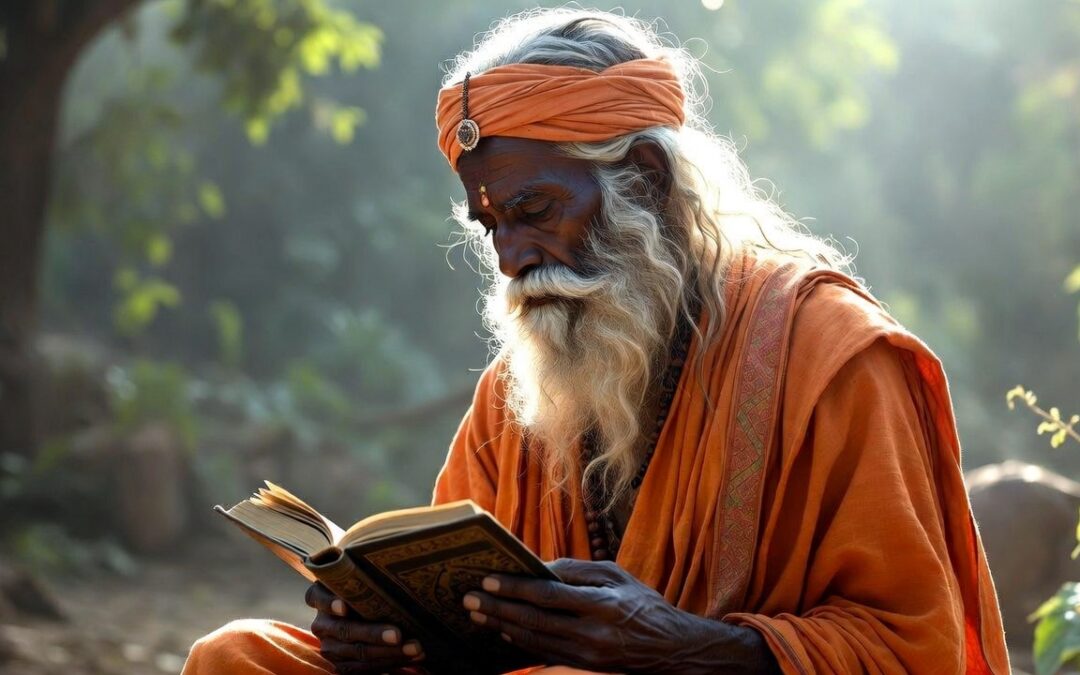
Unlocking the Timeless Wisdom: How the Bhagavad Gita Empowers Modern Life
Imagine standing on a vast battlefield, not with swords and shields, but facing the chaos of everyday decisions—work stress, relationships, or even the pull of endless distractions from your phone. That’s where Arjuna stood thousands of years ago, frozen in doubt, until Bhagwan Krishna stepped in with words that still echo today. The Bhagavad Gita, often called the Gita, isn’t just an ancient text; it’s a powerful guide that can transform how we navigate our fast-paced world. In this blog, we’ll dive into why this sacred scripture remains so relevant, blending timeless teachings with stories that feel alive and practical tips that anyone can try. Whether you’re new to Hindu spirituality or have read the Gita before, let’s explore how its wisdom can bring clarity, strength, and peace to your life right now.
The Historical and Scriptural Roots of the Bhagavad Gita
To understand the Gita’s power, we need to go back to its origins. Picture this: It’s part of the epic Mahabharata, one of the longest poems ever written, composed around 5,000 years ago in ancient India. The Mahabharata tells the story of a great war between two families, the Pandavas and the Kauravas, fighting for the throne of Hastinapura. Right in the middle, on the battlefield of Kurukshetra, Arjuna—a mighty warrior and one of the Pandavas—drops his bow. He’s overwhelmed by the thought of fighting his own relatives, teachers, and friends. That’s when his charioteer, who is none other than Bhagwan Krishna (an incarnation of Bhagwan Vishnu), shares the profound teachings that make up the Bhagavad Gita.
The Gita draws from even older sources like the Vedas and Upanishads, which are the foundational scriptures of Hinduism. The Vedas are like the ancient hymns and rituals that connect humans to the divine, while the Upanishads explore deep questions about the soul, the universe, and ultimate reality. The Gita weaves these ideas into 700 verses across 18 chapters, making complex philosophy accessible. It’s not just a book; it’s a dialogue—a conversation between Arjuna and Bhagwan Krishna that feels personal, like a wise friend giving advice.
One lesser-known fact is that the Gita was likely composed by Sage Vyasa, the same narrator of the Mahabharata. Vyasa is said to have dictated the entire epic to Bhagwan Ganesha, who wrote it down with his tusk. This adds a layer of divine inspiration, showing how the Gita is tied to the cosmic order, or “Rita,” the natural harmony of the universe mentioned in the Rig Veda. In essence, the Gita isn’t history—it’s a blueprint for living in alignment with dharma (righteous duty) and karma (actions and their consequences).
Also read: 10 Fascinating Facts About Makar Sankranti: From Mahabharata Tales to Harvest Joys
Ancient Stories and Myths That Bring the Gita to Life
Stories make ideas stick, don’t they? The Gita is full of them, used by Bhagwan Krishna to explain big concepts simply. Take the famous chariot metaphor. Arjuna’s chariot represents the human body, with the horses as our senses pulling us in different directions. The reins are the mind, and the charioteer is the intellect guided by divine wisdom—like Bhagwan Krishna himself. This story shows how we can control our “inner battlefield” instead of letting emotions run wild.
Another tale within the Gita is Bhagwan Krishna revealing his universal form, the Vishvarupa. Arjuna sees the entire cosmos in Bhagwan Krishna’s being—suns, moons, gods, and even time itself devouring everything. It’s a mind-blowing moment that illustrates the concept of Brahman, the ultimate reality beyond our senses. Think of it like peeking behind the curtain of the universe; it reminds us that everything is connected, and our small worries are part of a bigger picture.
These myths aren’t just entertaining—they highlight spiritual awakening. For instance, the story of Arjuna’s dilemma mirrors our own: Should I quit my job? How do I forgive someone? The Gita says act without attachment to results, a idea rooted in karma yoga (the path of selfless action). It’s like planting a seed without obsessing over the fruit; the growth happens naturally.
Also read: Why Bhagavad Gita is the Song of God – A Spiritual Deep Dive
The Profound Relevance of the Bhagavad Gita in Today’s World
Now, let’s get to the heart: Why does the Gita matter in 2026, with AI, climate change, and social media overload? Its teachings are timeless because they address universal human struggles. In a world obsessed with success, the Gita teaches “Nishkama Karma”—do your duty without expecting rewards. Imagine applying this at work: Focus on your tasks with full effort, but don’t let failures crush you. This reduces stress and builds resilience, something backed by modern psychology. Studies on mindfulness, inspired by Eastern philosophies like the Gita, show it lowers anxiety—think of apps like Headspace drawing from these ideas.
The Gita also speaks to mental health. Chapter 5 talks about equanimity—staying balanced in joy and sorrow. In our emotional rollercoaster lives, this is gold. For young people facing peer pressure or exam stress, it’s like a superpower. Bhagwan Krishna says the soul is eternal, beyond the body, which can comfort those dealing with loss or identity crises. It’s a gentle reminder that we’re more than our Instagram likes or bank balances.
On a global scale, the Gita promotes unity. It says all paths lead to the same truth, respecting diverse beliefs. In divided times, this fosters tolerance. Leaders like Mahatma Gandhi drew from it for non-violence (ahimsa), influencing civil rights worldwide. Even scientists like Albert Einstein praised the Gita for its insights into the universe, connecting to quantum physics’ ideas of interconnectedness.
Deeper insights? The Gita links to cosmic order through the three gunas—sattva (purity), rajas (activity), and tamas (inertia). Balancing these is key to spiritual growth. For example, eating sattvic food (fresh, vegetarian) can clear the mind, tying into modern wellness trends like yoga, which stems from the Gita’s teachings.
Practical Applications and Tips for Everyday Life
The Gita isn’t meant to sit on a shelf—it’s for action! Here are some ways to apply it:
- Start with Meditation: Bhagwan Krishna emphasizes dhyana (meditation) in Chapter 6. Try 10 minutes daily: Sit quietly, focus on your breath, and repeat a simple mantra like “Om.” It calms the mind and boosts focus, perfect for busy schedules.
- Embrace Your Dharma: Identify your role—student, parent, professional—and do it well. If you’re a student, study diligently without fear of grades. This builds purpose.
- Practice Detachment: Next time you’re upset about a setback, remember: “You have a right to perform your prescribed duties, but you are not entitled to the fruits of your actions” (Chapter 2, Verse 47). Journal your efforts, not outcomes.
- Incorporate Bhakti Yoga: Devotion to the divine. Chant the Hare Krishna mantra or visit a temple. It brings joy and connects you to something greater.
Do’s and Don’ts: Do read the Gita with an open heart, perhaps with commentaries like those by Adi Shankaracharya for depth. Don’t rush—reflect on one verse a day. Avoid misinterpreting it for personal gain; it’s about selfless service.
Rituals? Many recite the Gita during Ekadashi or Gita Jayanti (the day it was spoken). Globally, celebrations like Gita Mahotsav in India draw millions, with readings and discussions. In the West, yoga retreats often include Gita studies, showing its universal appeal.
Also read: Yajur Veda on Sacrifices for Peace and Prosperity
Benefits: Spiritual, Scientific, and Everyday
Spiritually, the Gita awakens the soul, leading to moksha (liberation) from the cycle of birth and death. It strengthens dharma, helping you live ethically.
Scientifically, its stress-management techniques align with neuroscience—meditation changes brain waves for better emotional control. Everyday benefits? Improved relationships through forgiveness (as Arjuna learns), better decision-making, and inner peace amid chaos.
Regional variations: In South India, it’s chanted in Tamil temples; in the North, during festivals like Janmashtami honoring Bhagwan Krishna. Globally, translations in over 100 languages make it accessible.
An Uplifting Spiritual Message
As we wrap up, remember the Gita’s core: Life is a journey of growth, guided by wisdom that transcends time. In embracing its teachings, we find harmony with the universe, living with purpose, compassion, and joy. Let Bhagwan Krishna’s words inspire you to face your battles with courage. May this ancient gem bring peace to your heart and light to the world—because true power lies in timeless truths that unite us all.
Support us by purchasing from our Affiliate Links: