
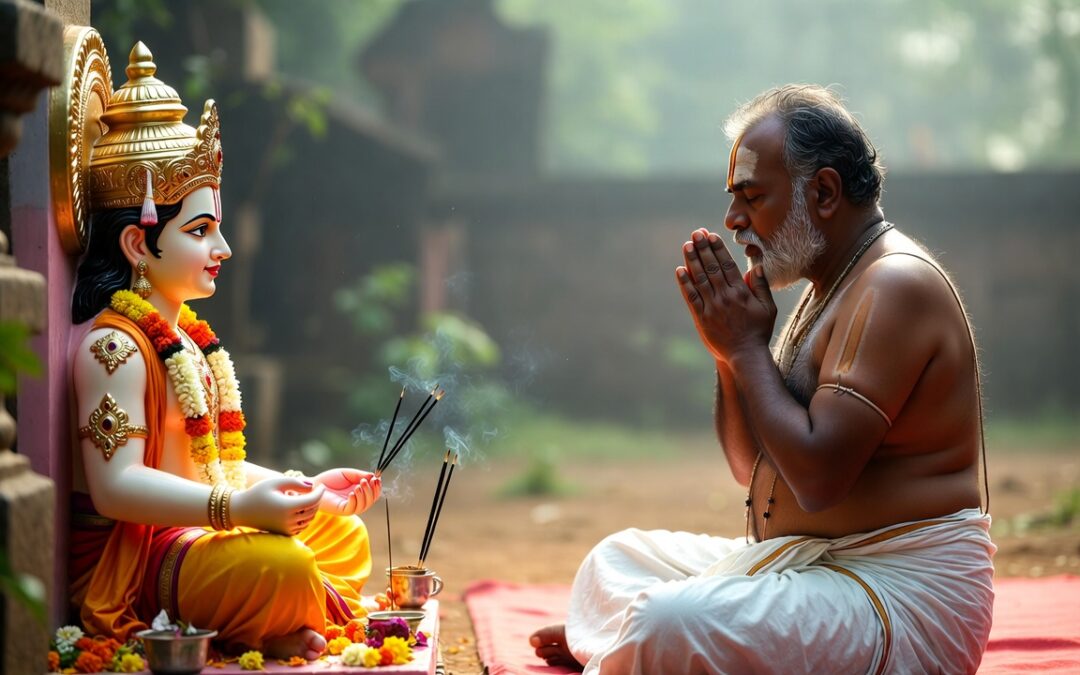
Unveiling the Essence of Karma Sannyasa Yoga: The Path to True Renunciation
Have you ever felt torn between diving into the hustle of daily life and the quiet pull to step away from it all? Picture a mighty warrior, standing on a vast battlefield, his bow trembling in his hands as doubts cloud his mind. This is Arjuna, the great hero of the Mahabharata, facing a crisis that echoes in our own lives: Should I act, or should I renounce? In the timeless wisdom of the Bhagavad Gita, Bhagwan Krishna steps in like a gentle guide, revealing the secrets of Karma Sannyasa Yoga – the Yoga of Renunciation. This chapter isn’t about fleeing the world; it’s about finding freedom right in the middle of it. Let’s journey together through this profound teaching, unraveling its layers like peeling an onion to discover the sweet core of inner peace.
The Scriptural Roots: Where Does Karma Sannyasa Yoga Come From?
Karma Sannyasa Yoga finds its home in Chapter 5 of the Bhagavad Gita, a sacred dialogue between Bhagwan Krishna and Arjuna amidst the chaos of the Kurukshetra war. The Gita itself is part of the epic Mahabharata, composed by the sage Vyasa, and draws from ancient Vedic wisdom, including the Upanishads and Puranas. Here, Arjuna asks a burning question: Which is better – the path of selfless action (Karma Yoga) or complete renunciation (Sannyasa)? Bhagwan Krishna smiles and explains that both lead to the same divine goal, but true renunciation isn’t about abandoning duties; it’s about letting go of attachment to their outcomes.
Think of it like this: Imagine you’re planting a garden. In Karma Yoga, you till the soil, water the seeds, and pull the weeds without obsessing over whether you’ll get the biggest flowers. Sannyasa, on the other hand, is like realizing the garden isn’t “yours” at all – you’re just tending it for the greater good. Bhagwan Krishna says both paths purify the soul, but for most people, starting with action is easier because pure renunciation without inner preparation is tough. He draws from Sankhya philosophy (analytical knowledge from the Upanishads) to show that the wise see no real difference between the two – master one, and you gain the fruits of both.
In the Vedas, like the Rig Veda, we find hints of this balance between action and detachment, but the Gita makes it crystal clear. The Puranas, full of stories from ancient times, often illustrate these ideas through the lives of sages and kings who lived them out.
Ancient Stories That Bring the Teachings to Life
To make these concepts stick, let’s dive into some captivating tales from our ancient granths. These aren’t just myths; they’re mirrors reflecting how renunciation works in real scenarios.
Take the story of King Janaka from the Brihadaranyaka Upanishad and the Mahabharata. Janaka was a powerful ruler, overseeing a vast kingdom with all its responsibilities – wars, alliances, and daily governance. Yet, inside, he was like a lotus leaf floating on water: always in touch with the world but never soaked by its troubles. Bhagwan Krishna references such souls in the Gita, saying they perform actions without claiming ownership, offering everything to the divine. Janaka once hosted a great debate among sages, and even the enlightened Yajnavalkya marveled at his detachment. “How do you rule without getting entangled?” they asked. Janaka replied, “I act as if in a dream – involved, but not attached.” This is Karma Sannyasa in action: ruling a kingdom while renouncing ego.
Another gem comes from the Ramayana. When Bhagwan Rama was exiled to the forest for 14 years by his stepmother’s whim, he didn’t rebel or sulk. Instead, he embraced his duty with calm acceptance, seeing it as part of the cosmic dharma (righteous order). Living in the wilderness with Mata Sita and Lakshmana, he fought demons, befriended animals, and upheld justice – all without craving the throne he lost or resenting his fate. This renunciation of personal desires while acting selflessly mirrors Bhagwan Krishna’s teaching: “One who neither hates nor desires the fruits of actions is always renounced.” Rama’s life shows how Karma Sannyasa weaves through challenges, leading to ultimate victory and harmony.
And let’s not forget Prahlad Maharaj from the Puranas, like the Bhagavata Purana. Born to the demon king Hiranyakashipu, Prahlad faced torture for his devotion to Bhagwan Vishnu. Yet, he renounced fear and anger, seeing equality in all – friend or foe. When Bhagwan Vishnu appeared as Narasimha to save him, Prahlad’s calm detachment shone through. These stories illustrate that true Sannyasa is an inner state, connecting us to karma (actions and their consequences) and dharma, guiding us toward spiritual awakening.
Also read: How Jnana Karma Sannyasa Yoga Transforms Your Life
The Deeper Insights: Connecting to Cosmic Order, Dharma, and Karma
At its heart, Karma Sannyasa Yoga teaches that the universe runs on gunas – the three modes of nature (sattva for goodness, rajas for passion, tamas for ignorance) from the Sankhya system. Actions happen through these, but the soul is beyond them. A lesser-known fact? Bhagwan Krishna explains “action in inaction” – even when you’re sitting still, your mind might be racing with desires, binding you. Conversely, a busy person with a detached mind is truly renounced. This flips our usual thinking!
Linking to karma: Every action creates ripples, but renouncing attachment breaks the cycle of rebirth. Dharma comes in as performing your role – as a student, parent, or worker – without ego. Spiritual awakening happens when you see Brahman (the ultimate reality) in everything, from a wise scholar to a humble animal. It’s like wearing glasses that reveal the divine equality beneath differences.
Significance in Modern Life: Practical Tips and a Real-Life Example
In today’s fast-paced world, Karma Sannyasa Yoga isn’t some dusty relic; it’s a toolkit for sanity. We juggle jobs, families, and endless notifications, often feeling overwhelmed. The Gita’s message? Act, but don’t cling. This leads to less stress and more joy.
Practical tips:
- Start small: Begin your day with a simple mantra like “Om Namo Bhagavate Vasudevaya” to dedicate actions to Bhagwan Krishna. This sets a tone of detachment.
- Mindful duties: When working, focus on the task, not the praise or paycheck. Ask: “Am I doing this for ego or service?”
- Do’s and don’ts: Do offer your food as prasad before eating (a ritual from the Gita). Don’t harbor grudges – forgive like Prahlad. Avoid extremes; balance action with quiet reflection.
- Breath control: As in verses 27-28, practice pranayama to calm urges of desire and anger.
Now, for a real-life example: Mahatma Gandhi embodied this yoga during India’s freedom struggle. As a lawyer turned leader, he marched, fasted, and negotiated without personal ambition or hatred toward the British. His non-violent Satyagraha was pure action detached from results – he once said, “I do not seek kingdom or heaven; I seek to end suffering.” Even in prison, he spun cotton and read the Gita, renouncing comfort for dharma. Gandhi’s life shows how Karma Sannyasa turns ordinary efforts into liberation, inspiring global peace movements.
Also read: How Karma Yoga from Bhagavad Gita Changes Your Life Forever
The Benefits: Spiritual, Scientific, and Everyday
Spiritually, this yoga frees you from rebirth’s cycle, leading to moksha (liberation). Scientifically, studies on mindfulness (echoing detachment) show reduced anxiety and better focus – think of it as ancient wisdom meeting modern psychology. Everyday perks? Stronger relationships, as you act without expectations; career success without burnout; and inner peace amid chaos.
Regional variations: In Kerala, temple rituals emphasize devotional action; in the Himalayas, ascetics practice stricter Sannyasa. Globally, yoga classes often teach Gita principles, blending East and West for universal harmony.
An Uplifting Spiritual Message: Embracing Timeless Wisdom
As we wrap up, remember: Karma Sannyasa Yoga isn’t about escaping life but embracing it with open arms and a free heart. Like the lotus rising pure from mud, you can navigate worldly waters untouched. By renouncing attachment, you align with the cosmic dance of dharma and karma, awakening to the divine within. In Bhagwan Krishna’s words, know Him as the supreme friend of all beings, and peace will be yours. May this wisdom bring you harmony, guiding you to live fully yet freely, spreading light in a world that needs it.
Support us by purchasing from our Affiliate Links: