
Bhakti Yoga vs Karma Yoga: Which Path is Right for You?
Imagine standing at the edge of a vast ocean, waves crashing with endless energy, and you’re holding a small boat. Do you row tirelessly through the storms, trusting your oars to guide you, or do you surrender to the current, letting love for the sea carry you home? This is the essence of the ancient paths of Karma Yoga and Bhakti Yoga—two timeless rivers flowing from the same source, the Bhagavad Gita, where Bhagwan Krishna whispers wisdom to a troubled warrior on a battlefield. If you’ve ever felt lost in the hustle of modern life, wondering how to find peace amid chaos, these paths offer a gentle hand. They’re not rivals but companions, inviting you to explore what stirs your soul most. In this journey, we’ll uncover their roots in sacred texts, weave in enchanting tales from Hindu lore, and see how they light up our everyday world. Ready to dip your toes in? Let’s sail together.
The Battlefield of the Mind: Where These Paths Were Born
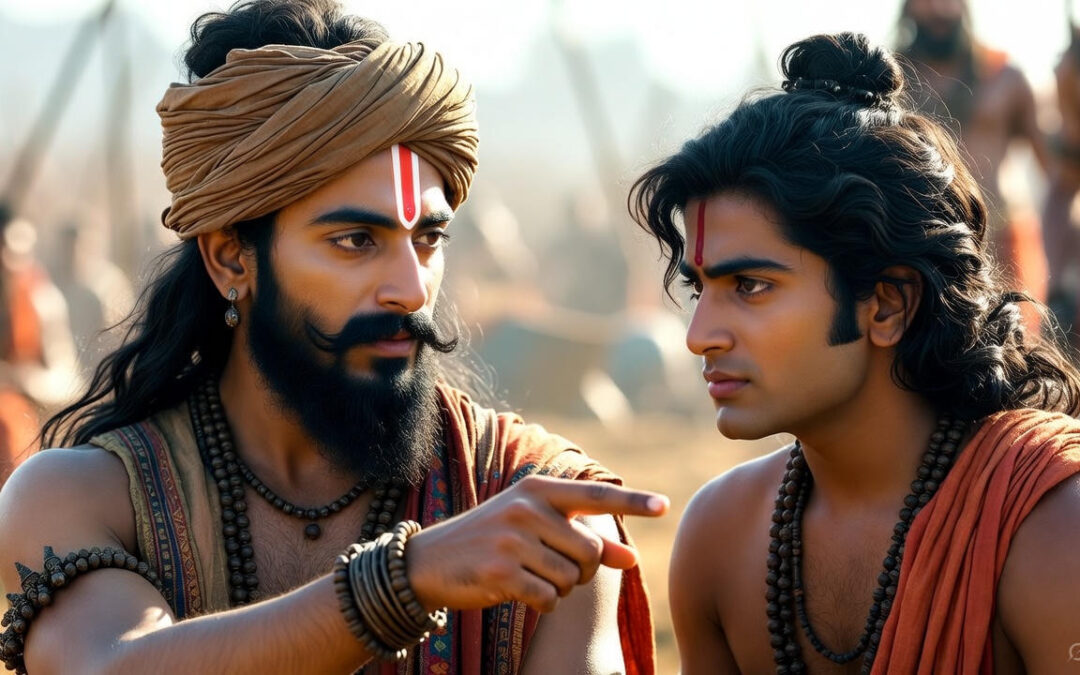
Long ago, on the blood-soaked fields of Kurukshetra, Prince Arjuna faced a heart-wrenching crisis. His bow slipped from his hands as he gazed at his kin—brothers, teachers, friends—arrayed for war in the great Mahabharata. Overwhelmed by doubt, he turned to his charioteer, Bhagwan Krishna, who revealed profound truths in the Bhagavad Gita, a jewel of the Upanishads and a cornerstone of Hindu spirituality.
The Gita isn’t just a book; it’s a conversation between confusion and clarity, action and surrender. Here, Bhagwan Krishna outlines four main yogas—paths to union with the divine: Jnana Yoga (knowledge), Raja Yoga (meditation), Karma Yoga (selfless action), and Bhakti Yoga (devotion). Our focus today is on the last two, born from Arjuna’s plea: How can I act without attachment? How can I love without fear? These paths echo the Vedas’ call to dharma (righteous living) and the Puranas’ songs of divine love, reminding us that spirituality isn’t a distant peak but a daily walk.
Karma Yoga shines in Chapter 3 of the Gita, titled “Karm Yog,” where Bhagwan Krishna urges Arjuna: “You have a right to perform your prescribed duties, but you are not entitled to the fruits of your actions.” It’s the yoga of doing, purified by detachment. Bhakti Yoga blooms in Chapter 12, “Bhakti Yog,” with verses like 12.2: “Those who fix their minds on Me with unwavering faith, renouncing all else, are the best yogis in My opinion.” Here, love is the oar, devotion the sail. Both paths dissolve the ego’s grip, leading to moksha—liberation from the cycle of birth and rebirth—but they suit different hearts, like sunlight and moonlight gracing the same garden.
Also read: Why the Guru Is Your Guide to Spiritual Awakening in Hinduism
Unpacking Karma Yoga: The Dance of Selfless Action
Picture a farmer tilling his field at dawn. He scatters seeds not for instant harvest but because it’s his dharma, his sacred duty. Sweat beads on his brow, yet his mind is free, unattached to drought or bounty. This is Karma Yoga in motion—a path where every step is an offering.
Rooted in the Rig Veda’s hymns to cosmic order (rita), Karma Yoga teaches that inaction binds the soul tighter than chains. As Bhagwan Krishna explains in Gita 3.5: “No one can remain without acting even for a moment; everyone is driven to action by the qualities of nature.” The key? Nishkama karma—action without craving results. It’s not about quitting your job or fleeing to the Himalayas; it’s transforming routine into ritual.
In the Mahabharata, Arjuna embodies this. Despite his warrior’s grief, he fights not for victory’s glory but as an instrument of divine will. Bhagwan Krishna’s chariot steers him, reminding us: Perform your role in life’s grand play, but let go of the script’s end. A lesser-known gem? The Gita links this to prakriti (nature’s forces), where even gods act without ego, maintaining the universe’s balance. Imagine: Your morning coffee run or office email becomes a thread in the cosmic tapestry, weaving dharma into karma’s loom.
Benefits of Walking the Karma Path
- Spiritual Growth: Detachment burns ego like fire refines gold, fostering inner peace amid outer storms.
- Everyday Magic: Reduces stress—studies echo this, showing mindful action lowers anxiety, aligning with yoga’s ancient science.
- Karmic Harmony: Plants seeds of positive karma, rippling goodwill to future lives.
- Practical Edge: Boosts productivity; selfless workers often find joy in the flow, not the finish line.
Regional whispers add flavor: In South India’s Tamil Nadu, Karma Yoga inspires temple service (seva), where devotees clean shrines without fanfare, echoing the Gita’s call.
Diving into Bhakti Yoga: The Melody of Divine Love
Now, shift to a moonlit riverbank, where a child clutches a flower, offering it to the stars with wide-eyed wonder. No calculations, no duties—just pure, overflowing love. This is Bhakti Yoga, the heart’s unbridled song to the divine.
Drawn from the Bhagavata Purana’s tales of surrender, Bhakti Yoga flowered in medieval India through saints like the Alvars and Nayanars, who sang of Maa Lakshmi and Bhagwan Shiva with tears of joy. In the Gita, Bhagwan Krishna praises it as the simplest yet profoundest path: “Fix your mind on Me alone; let your intellect dwell on Me. Thus, you shall live in Me always.” (12.8) It’s accessible—no scholarly tomes needed, just a soul open like a lotus to the sun.
Devotion isn’t blind faith; it’s a relationship. Chant “Hare Krishna” or sing to Maa Durga, and the divine responds, melting barriers. A hidden insight: Bhakti awakens kundalini energy subtly, linking heart chakra (anahata) to cosmic love, as per Tantric texts. In stories, Hanuman’s leap across the ocean for Bhagwan Rama wasn’t duty—it was love’s fire, burning oceans to ash.
From the Ramayana, Hanuman’s tale illustrates: Searching for Sita Mata, he declares, “I know nothing of myself; I am a spark of Bhagwan Rama’s glory.” This selfless love mirrors Gita 12.13-14: The true devotee “harbors no ill will toward any being, is friendly and compassionate… content with what comes unasked.” Lesser-known? In the Padma Purana, Bhakti is depicted as a queen among yogas, accessible even to the illiterate, democratizing enlightenment.
Also read: Unlocking Shakti: The Power of Divine Feminine Energy in Hinduism
The Gifts of Bhakti’s Embrace
- Emotional Healing: Fills voids with divine connection, easing loneliness in our digital age.
- Scientific Spark: Modern neuroscience links chanting to reduced cortisol, mirroring bhajans’ stress-soothing vibes.
- Universal Bond: Cultivates empathy, turning “me” into “we” through shared devotion.
- Awakening Joy: Sparks spontaneous bliss (ananda), as saints like Mirabai danced in ecstatic union with Bhagwan Krishna.
Globally, Bhakti echoes in kirtans from California ashrams to London’s Gita festivals, blending with world faiths’ love paths.
Side by Side: Where They Converge and Diverge
Like two rivers merging into the sea, Karma and Bhakti share a destination—union with the divine—but their waters flow differently. Here’s a gentle comparison:
| Aspect | Karma Yoga | Bhakti Yoga |
|---|---|---|
| Core Focus | Selfless action, duty without attachment | Loving surrender, devotion as worship |
| Scriptural Heart | Gita Ch. 3: “Act for action’s sake” | Gita Ch. 12: “Fix mind on Me in faith” |
| Temperament Fit | For doers, leaders, the action-oriented | For feelers, artists, the heart-led |
| Daily Practice | Mindful work, offering results to divine | Prayer, song, remembrance of the beloved |
| Challenge | Mastering detachment amid desires | Overcoming doubt in unseen love |
| Ultimate Gift | Freedom from karma’s bonds | Eternal companionship with the divine |
Similarities? Both renounce ego—Karma through deeds, Bhakti through love—and lead to jnana (wisdom). Bhagwan Krishna says in Gita 5.2: The yogas of knowledge and renunciation are the same; both purify the heart. A cosmic tie: They uphold dharma, balancing individual karma with universal harmony.
Differences shine in stories. Take Mirabai from Rajasthan’s folklore: A princess who abandoned palaces for Bhagwan Krishna’s flute, her bhajans a torrent of love. Contrast with King Janaka from the Ramayana, a Karma Yogi ruling wisely, detached like a lotus in mud. Neither superior; both stars in spirituality’s sky.
Timeless Tales: Lessons from Ancient Sages
Let these myths whisper secrets. In the Bhagavata Purana, young Prahlad defies his demon father Hiranyakashipu, chanting “Narayana” amid tortures. His Bhakti summons Bhagwan Vishnu as Narasimha, tearing asunder tyranny. Lesson? Devotion shields like an unbreakable fortress, awakening divine protection.
For Karma, recall Vidura from the Mahabharata—a humble minister advising kings with selfless counsel. Despite exile’s sting, his actions wove righteousness, earning moksha. These aren’t fables; they’re mirrors, showing how paths transform trials into triumphs.
Weaving Them into Modern Life: Practical Steps
In our gadget-glued world, these yogas aren’t relics—they’re lifelines. Stressed at work? Channel Karma: Tackle tasks as offerings to Bhagwan Ganesha, the remover of obstacles. End emails with a silent “This is for You,” releasing outcome worries. Tip: Start small—wash dishes mindfully, noting breath’s rhythm.
Craving deeper connection? Embrace Bhakti: Dedicate evenings to a simple aarti before Maa Saraswati’s image, singing her praises. Mantra magic: Recite “Om Namo Bhagavate Vasudevaya” 108 times, beads in hand, feeling love bloom.
Do’s and Don’ts:
- Do: Blend paths—offer actions (Karma) with devotion (Bhakti) for a fuller bloom.
- Don’t: Judge your path; Arjuna’s doubt teaches flexibility.
- Ritual Spark: On Ekadashi, fast lightly and reflect; or join a satsang for shared bhajans.
Benefits ripple: Spiritually, they ignite awakening; scientifically, yoga practices enhance brain plasticity; daily, they foster resilience, turning Mondays into meditations.
Regional variations enchant: Bengal’s Durga Puja pulses with Bhakti dances, while Kerala’s Karma-inspired Onam harvest honors selfless toil. Globally, ISKCON’s Hare Krishna festivals unite thousands in Bhakti’s embrace.
A Harmonious Horizon: Your Path Awaits
As the Gita’s echoes fade, remember Bhagwan Krishna’s promise in 18.66: “Abandon all varieties of dharmas and just surrender unto Me. I shall deliver you from all sinful reactions. Do not fear.” Whether you march with Karma’s steady steps or dance in Bhakti’s joyful whirl, the divine awaits—not as a judge, but a beloved friend. These paths aren’t choices to conquer but invitations to unfold your soul’s lotus. In a world of fleeting likes and endless to-dos, they whisper: You are enough. Love fiercely, act kindly, and harmony follows. May your journey ripple peace across hearts, weaving the universe’s grand tapestry of light. Namaste.
Support us by purchasing from our Affiliate Links:
The Beginner’s Guide to Karma: How to Live with Less Negativity and More Peace
The Complete Book of Yoga: Karma Yoga, Bhakti Yoga, Raja Yoga, Jnana Yoga