
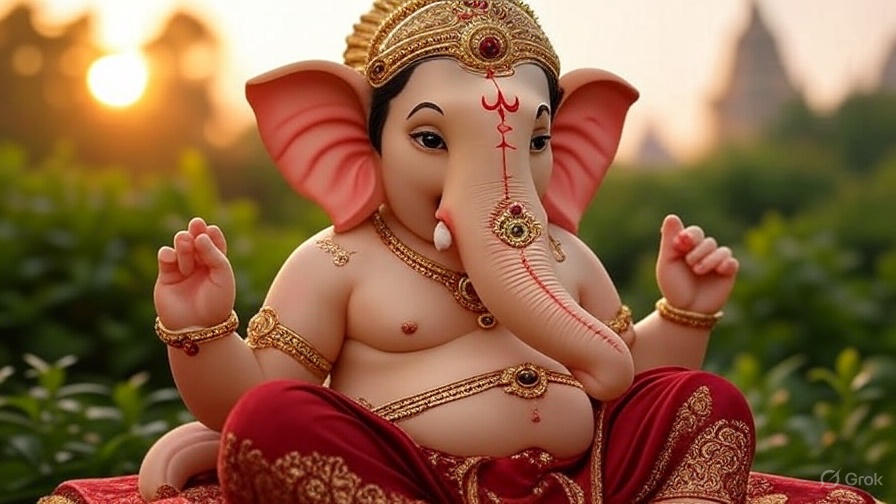
The Hidden Lessons of Bhagwan Ganesha Elephant Head and More
Meaning of Different Parts of Bhagwan Ganesha
Welcome to a journey of discovery about one of the most beloved deities in Hinduism—Bhagwan Ganesha! With his charming elephant head, big belly, and playful mouse vehicle, Bhagwan Ganesha captures hearts across the world. Known as the remover of obstacles, the lord of new beginnings, and the god of wisdom, he is worshipped before starting anything important—a new school year, a job, or even a family celebration. But have you ever wondered why Bhagwan Ganesha looks the way he does? Every part of his unique form carries a deep meaning, guiding us to live better lives. In this blog, we’ll dive into the story of how he got his elephant head, what each part of his body symbolizes, and how kids and adults can bring his teachings and blessings into their lives. Let’s explore the wisdom hidden in Bhagwan Ganesha’s form!
The Story of Bhagwan Ganesha’s Elephant Head
Let’s start with the fascinating tale of how Bhagwan Ganesha got his iconic elephant head. This story, found in texts like the Brahma Vaivarta Purana, is both heartwarming and meaningful. Long ago, Mata Parvati, the divine mother, wanted to take a bath in peace. Using turmeric paste from her bath, she created a young boy and gave him life. She asked him to guard the door and not let anyone enter. The boy stood firm, following her orders with devotion.
Meanwhile, Bhagwan Shiva, Mata Parvati’s husband, returned home. Unaware of the boy’s identity, he tried to enter. The boy bravely stopped him, saying no one could pass without Mata Parvati’s permission. Bhagwan Shiva, surprised and angered by this challenge, fought the boy and, in a moment of rage, cut off his head with his trident.
When Mata Parvati saw her son lifeless, her heart broke. She pleaded with Bhagwan Shiva to bring him back. Moved by her love, Bhagwan Shiva promised to make things right. He sent his followers to find the head of the first living being they saw sleeping with its head facing north. They came across a young elephant in that position and brought back its head. Bhagwan Shiva placed the elephant head on the boy’s body and breathed life into him. He named the boy Ganesha, meaning “lord of all beings,” and declared that he would be worshipped first among all gods.
This story teaches us about love, quick thinking, and the power of second chances. It also shows why Bhagwan Ganesha’s elephant head is so special—it’s a symbol of divine wisdom and strength.
Also read: Gowri Habba: Honoring the Divine Mother Before Ganesh Chaturthi
The Elephant Head: A Symbol of Wisdom
Bhagwan Ganesha’s elephant head is one of his most striking features. Elephants are known for their intelligence, sharp memory, and gentle strength. They never forget paths or friends, even after years. Similarly, the elephant head represents wisdom and the ability to think deeply. It reminds us to use our minds wisely, learn from our experiences, and make thoughtful decisions.
The head also carries a deeper spiritual meaning. By combining an elephant’s head with a human body, Bhagwan Ganesha shows that all living beings are connected. It teaches us to respect nature and live in harmony with all creatures. In daily life, this means studying hard, seeking knowledge, and thinking carefully before acting—whether you’re choosing a career or solving a small problem at home.
The Trunk: Adaptability and Discernment
Bhagwan Ganesha’s long, curved trunk is a marvel. An elephant’s trunk can pick up a tiny blade of grass or lift a heavy log. It’s gentle yet strong, flexible yet precise. This symbolizes adaptability—the ability to handle any situation life throws at us. Whether it’s a tough exam or a sudden change in plans, the trunk teaches us to stay calm and adjust.
The trunk also represents discernment, or the ability to tell right from wrong. It’s shaped like the sacred sound “Om,” the starting point of creation in Hinduism. By meditating on the trunk, we learn to make wise choices and stay flexible without losing our values. For example, if a friend wants you to skip studying for fun, the trunk reminds you to balance enjoyment with responsibility.
The Broken Tusk: Sacrifice and Dedication
Have you noticed that Bhagwan Ganesha has one broken tusk? There’s a beautiful story behind it from the Mahabharata. Sage Vyasa wanted to write the epic Mahabharata but needed a scribe who could write without stopping. Bhagwan Ganesha offered to help, but only if Vyasa narrated without pausing. As they worked, the pen broke. Without hesitation, Bhagwan Ganesha broke off his tusk and used it as a pen to keep writing.
This broken tusk is a symbol of sacrifice. It shows that sometimes we must give up something dear—like time or comfort—for a greater goal. The whole tusk represents keeping our good qualities, while the broken one reminds us to let go of ego or bad habits. In life, this could mean giving up extra screen time to help a sibling or working hard on a project instead of relaxing. It’s about putting effort into what matters most.
The Big Belly: Acceptance and Generosity
Bhagwan Ganesha’s round, large belly is one of his most endearing features. It looks like it can hold everything! This belly symbolizes the ability to digest all of life’s experiences—both the sweet and the bitter. Life brings joys, like a birthday party, and sorrows, like losing a game. The big belly teaches us to accept both with grace and not let setbacks upset us for long.
It also stands for contentment and generosity. A full belly means being happy with what we have and sharing with others. Just as elephants eat a lot to stay strong, we should “consume” knowledge and experiences to grow. In practice, this means being grateful for your home or food and sharing with those in need, like donating toys or helping a friend.
The Large Ears: Listening with Care
Bhagwan Ganesha’s big ears, like an elephant’s, are made for listening. Elephants can hear sounds from miles away, and Ganesha’s ears remind us to listen more than we speak. In Hinduism, listening to wise words from teachers, parents, or scriptures is a path to knowledge. The ears also tell us to ignore gossip or negativity and focus on what’s true and good.
For kids, this means paying attention in class or to parents’ advice. For adults, it’s about listening to others’ ideas at work or home before jumping to conclusions. Good listening builds understanding and helps us avoid mistakes.
The Small Eyes: Focus and Clarity
Despite his large form, Bhagwan Ganesha has small, sharp eyes like an elephant’s. These eyes symbolize focus and the ability to see the truth clearly. In a world full of distractions—phones, games, or social media—the small eyes teach us to concentrate on what matters. They also remind us to look beyond appearances and understand the deeper truth.
For example, if a friend seems upset, don’t just assume why—ask and understand. In studies or work, focus on one task at a time to do it well. The eyes guide us to stay alert and keep our goals in sight.
The Four Arms: Balance and Strength
Bhagwan Ganesha’s four arms represent the four aspects of our inner self: mind, intellect, ego, and conditioned mind. In his hands, he holds a rope (to pull us toward our goals), an axe (to cut bad habits), a modak (the sweet reward of wisdom), and a lotus (beauty in challenges). These arms teach us to balance our thoughts and actions, using our strengths to overcome weaknesses.
In daily life, this means planning your day (rope), saying no to laziness (axe), enjoying small successes (modak), and staying calm in tough times (lotus). It’s about finding harmony in everything we do.
The Mouse Vehicle: Mastering Desires
Bhagwan Ganesha rides a tiny mouse, which seems funny for such a big god! The mouse represents our desires—small but quick to nibble away at our peace if uncontrolled. By riding the mouse, Bhagwan Ganesha shows that we can master our wants. For instance, wanting too many toys or snacks can lead to trouble, but saying “no” when needed keeps us in control. This teaches kids to save pocket money instead of spending it all and adults to avoid impulsive decisions.
Also read: Why Bhagavad Gita is the Song of God – A Spiritual Deep Dive
The Legs: Balance in Life
Bhagwan Ganesha often sits with one leg folded and the other touching the ground. This shows a balance between the material world (the ground) and spiritual life (the folded leg). It reminds us to enjoy life’s pleasures—like family or hobbies—but stay connected to higher truths through prayer or kindness. For example, work hard at school but also take time to pray or help others.
Living Bhagwan Ganesha’s Teachings
Bhagwan Ganesha’s form is like a map for a happy life. Here’s how we can apply his lessons:
- Think like the elephant head: Read books, ask questions, and make smart choices. Before a big decision, like picking a school subject, think it through.
- Adapt like the trunk: If a plan fails, try a new way without getting mad. At school, if one study method doesn’t work, try another.
- Sacrifice like the broken tusk: Give up small comforts for bigger goals, like studying instead of watching TV.
- Accept like the big belly: Don’t let failures upset you. If you lose a game, learn from it and try again. Share with others, like giving food to someone hungry.
- Listen like the big ears: Pay attention to teachers or parents. Ignore mean words and focus on good advice.
- Focus like the small eyes: Work on one task at a time, like finishing homework before playing.
- Control desires like the mouse: Say no to too many sweets or distractions to stay healthy and focused.
- Balance like the legs: Enjoy life but pray or meditate to stay grounded.
By living these lessons, we remove our own obstacles and grow stronger, kinder, and wiser.
How to Seek Bhagwan Ganesha’s Blessings
Bhagwan Ganesha’s blessings bring success, peace, and wisdom. Here’s how kids and adults can invite his grace:
For Kids:
- Learn a simple sloka like “Vakratunda Mahakaya Suryakoti Samaprabha, Nirvighnam Kuru Me Deva Sarva-Kaaryeshu Sarvada.” Chant it in the morning.
- Draw or paint Bhagwan Ganesha or make clay idols during Ganesh Chaturthi.
- Help make modaks or decorate the puja area at home.
- Listen to stories about him and share what you learn with friends.
- Offer fruits like bananas, which he loves, during puja.
- Play games like puzzles to sharpen your mind, just like his wisdom.
For Adults:
- Do a daily puja with a lamp, flowers, and chanting “Om Gam Ganapataye Namah” 108 times.
- Fast on Wednesdays or Sankashti Chaturthi to remove obstacles.
- Read scriptures like the Ganesh Purana or Ganesha Atharva Sheersha.
- Visit temples and do seva, like helping clean or feeding others.
- Before starting a new project, pray to Bhagwan Ganesha for success.
- Keep a small idol at home or work for inspiration.
- Meditate on his form to find calm in busy times.
For Everyone: Celebrate Ganesh Chaturthi with devotion. Use eco-friendly idols, avoid loud music, and focus on prayers. Make sweets like laddoos at home and share prasadam with neighbors. By doing these with a pure heart, Bhagwan Ganesha showers blessings of happiness and success.
Final Thoughts
Bhagwan Ganesha’s form is more than a divine image—it’s a guide to living well. From his wise elephant head to his humble mouse, every part teaches us how to face life’s challenges with courage, wisdom, and kindness. By understanding these meanings and practicing them, we open our hearts to his blessings. May Bhagwan Ganesha remove all obstacles from your path and fill your life with joy, success, and peace.
Support us by purchasing from our Affiliate Links: