
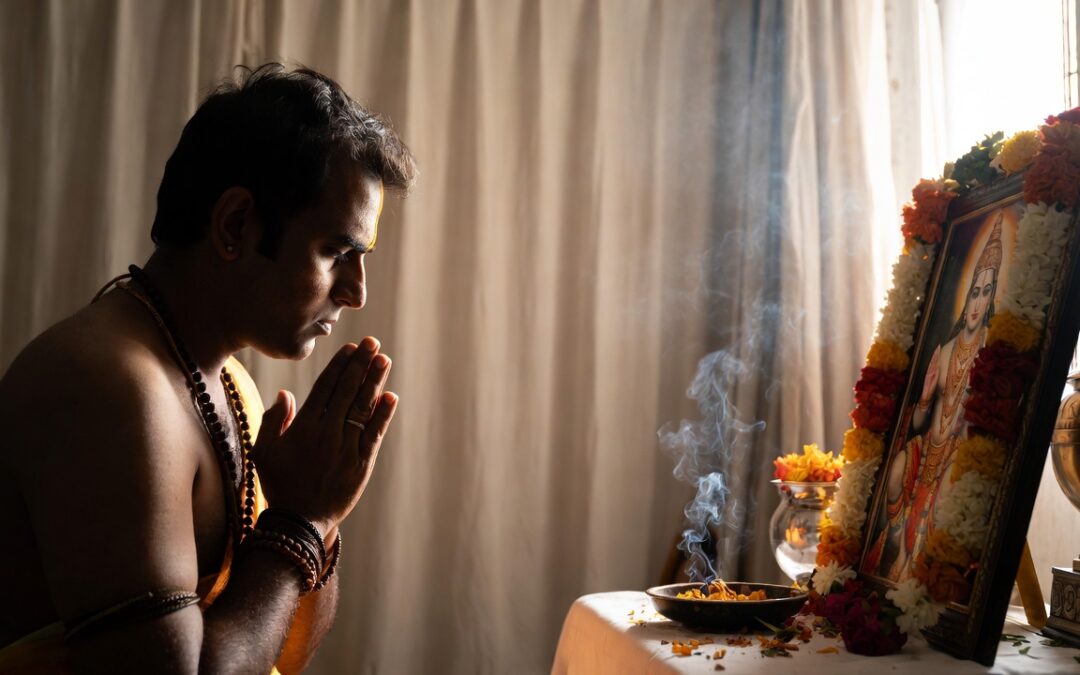
Discovering Your Ishta Devata: A Journey to Your Personal Divine Guide
Imagine you’re wandering through an ancient forest, the kind described in our timeless epics like the Mahabharata, where every rustle of leaves and whisper of wind feels like a message from the cosmos. Suddenly, a gentle light breaks through the canopy, drawing you toward a serene idol that resonates with your soul. This isn’t just a dream—it’s a metaphor for finding your Ishta Devata, the cherished deity who acts as your spiritual compass in Hinduism. In a world buzzing with distractions, connecting with your Ishta Devata can bring clarity, peace, and a deeper sense of purpose. But how do you uncover this divine connection? Let’s embark on this enlightening exploration together, step by step, like unraveling a sacred scroll from the Vedas.
What Is Ishta Devata? Unpacking the Concept
First things first, let’s break it down simply. “Ishta” means beloved or desired, and “Devata” refers to a divine being. So, your Ishta Devata is that special form of the Divine you feel most drawn to—the one who guides you toward spiritual growth and ultimate liberation, or moksha. Think of it as your personal spiritual mentor in the vast pantheon of Hindu deities.
In Hinduism, we believe the Divine is one, but manifests in countless forms to suit different souls. Just as a mother might appear as a teacher to one child and a friend to another, the Supreme takes forms like Bhagwan Vishnu, Bhagwan Shiva, or Maa Durga to connect with us individually. This idea isn’t new; it’s rooted in ancient wisdom. The Bhagavad Gita, where Bhagwan Krishna advises Arjuna, emphasizes devotion to a chosen form: “Whatever a man may sacrifice to other gods, O son of Kunti, is really meant for Me alone, but it is offered without true understanding.” Here, the focus is on sincere bhakti (devotion) to your Ishta.
For beginners, picture it like choosing a favorite teacher in school—the one who explains things in a way that clicks for you. Advanced seekers might see it as aligning with the cosmic energy that resonates with your karma and dharma.
Historical and Scriptural Roots: From Vedas to Puranas
To truly appreciate this, let’s travel back in time. The concept of Ishta Devata traces its origins to the Vedas, the oldest scriptures of Hinduism, dating back over 5,000 years. In the Rig Veda, hymns praise various devatas like Indra for strength or Agni for transformation, suggesting personal affinities. But it’s in later texts like the Upanishads and Puranas where the idea crystallizes.
The Brihadaranyaka Upanishad speaks of the Atman (soul) seeking union with Brahman through devotion. Sage Jaimini, in his Jaimini Sutras, a key astrological text, briefly mentions methods to identify one’s guiding deity based on planetary influences. Similarly, the Parashara Hora Shastra by Sage Parashara delves into how stars and planets reveal our spiritual inclinations.
In the Puranas, stories abound. Take the Skanda Purana, which narrates how devotees find their Ishta through divine signs. Or the Bhagavata Purana, where Prahlada’s unwavering devotion to Bhagwan Vishnu as his Ishta saves him from perils, illustrating how this bond transcends worldly challenges.
A lesser-known fact: In Tantric traditions, linked to the Agamas, the Ishta Devata is invoked in rituals for inner awakening. This connects to the idea of Shakti (divine energy), where Maa Kali or Maa Lakshmi might emerge as one’s guide, emphasizing the feminine divine in spiritual evolution.
Also read: Unlock the Transformative Power of the Bhagavad Gita in Modern Life
Ancient Stories That Illuminate the Path
Stories make complex ideas come alive, don’t they? Let’s dive into a couple of myths that show how one discovers their Ishta Devata.
Consider the tale of Markandeya from the Mahabharata. As a young boy facing death, he clung to a Shiva Lingam, chanting praises to Bhagwan Shiva. In that moment of surrender, Bhagwan Shiva appeared as his savior, becoming his eternal Ishta. This story teaches that crisis or deep meditation can reveal your divine ally, much like how modern seekers find solace in chanting “Om Namah Shivaya” during tough times.
Another gem is from the Ramayana: Hanuman’s devotion to Bhagwan Rama. Hanuman didn’t choose randomly; his heart naturally gravitated toward Rama’s qualities of dharma and compassion. When Sita was abducted, Hanuman’s bhakti fueled his leap across the ocean. This illustrates that your Ishta often mirrors your innate virtues—perhaps Bhagwan Rama for those valuing righteousness, or Maa Durga for warriors of inner strength.
A deeper insight: These stories link to karma. In past lives, our actions create samskaras (impressions) that draw us to specific devatas. If you’ve ever felt an inexplicable pull toward Bhagwan Krishna’s flute or Maa Parvati’s grace, it might be karmic echoes guiding you.
Methods to Find Your Ishta Devata: Practical Steps
Now, the exciting part—how to find yours! There are several authentic ways, blending astrology, intuition, and tradition. We’ll start with the most structured: Vedic astrology.
Astrological Approach: Decoding Your Birth Chart
Vedic astrology, or Jyotish, views your horoscope as a map of your soul’s journey. The key is the Atmakaraka, the planet with the highest degree in your birth chart (D1 or Lagna chart). This represents your soul’s desire.
- Identify the Atmakaraka: Calculate your birth chart using details like date, time, and place. Tools like free online calculators can help, but consult an astrologer for accuracy.
- Examine the Navamsa Chart (D9): This divisional chart shows deeper spiritual layers. Locate the sign where your Atmakaraka sits—this is the Karakamsa.
- Look at the 12th House from Karakamsa: This house points to moksha and your Ishta. If a planet occupies it, that’s your clue. If empty, consider the house lord.
Some traditions use the Vimsamsa (D20) chart for even finer spiritual insights, as debated by scholars like PVR Narasimha Rao, who noted discrepancies in famous charts like that of Ramakrishna Paramahansa (devoted to Maa Kali, not the predicted deity).
Planets and their corresponding devatas (based on classical texts like Parashara and Jaimini):
- Sun: Bhagwan Shiva or Bhagwan Rama (for leadership and purity).
- Moon: Maa Parvati, Maa Saraswati, or Bhagwan Krishna (for nurturing and wisdom).
- Mars: Bhagwan Hanuman, Bhagwan Kartikeya, or Bhagwan Narasimha (for courage).
- Mercury: Bhagwan Vishnu or Bhagwan Buddha (for intellect).
- Jupiter: Bhagwan Vishnu, Bhagwan Dattatreya, or Bhagwan Hayagreeva (for knowledge).
- Venus: Maa Lakshmi or Maa Gauri (for prosperity and love).
- Saturn: Bhagwan Shiva, Bhagwan Kurma, or Bhagwan Ayyappa (for discipline).
- Rahu: Maa Durga or Bhagwan Varaha (for overcoming illusions).
- Ketu: Bhagwan Ganesha or Bhagwan Matsya (for detachment).
If multiple planets, choose the strongest by aspects or strength. Remember, this is a guide—your heart confirms it.
Also read: 10 Fascinating Facts About Makar Sankranti
Intuitive and Traditional Methods
Not everyone has a precise birth time. No worries! Hinduism offers flexible paths.
- Meditation and Signs: Sit quietly, chant “Om” or a neutral mantra, and ask the Divine to reveal itself. Pay attention to dreams, recurring images (like a peacock feather for Bhagwan Krishna), or temple visits that stir your soul.
- Guru Guidance: A true spiritual teacher can sense your Ishta through intuition or rituals. In stories like the Upanishads, gurus like Yajnavalkya helped disciples find their path.
- Family and Kul Devata: Often, your family’s worshipped deity (Kul Devata) becomes your Ishta, passed down generations. In regions like Bengal, Maa Kali is common; in South India, Bhagwan Murugan.
- Heart’s Pull: Simply worship what inspires you. If chanting “Hare Krishna” brings joy, that’s a sign.
Do’s and Don’ts: Do approach with sincerity; don’t force it—let it unfold naturally. Avoid mixing too many devatas initially; focus on one for deeper connection.
Rituals and Mantras: Building the Bond
Once identified, nurture the relationship like a friendship.
-
Daily Worship: Offer simple puja with flowers, incense, and fruits. For Bhagwan Ganesha, modak sweets; for Maa Lakshmi, lotus flowers.
-
Mantras: Chant deity-specific ones. Examples:
- For Bhagwan Shiva: “Om Namah Shivaya” (108 times daily).
- For Maa Durga: “Om Dum Durgayei Namaha”.
- For Bhagwan Vishnu: “Om Namo Narayanaya”.
-
Festivals and Vratas: Participate in related celebrations. Navratri for Maa Durga, Janmashtami for Bhagwan Krishna. Regional variations: In Kerala, Bhagwan Ayyappa’s Sabarimala pilgrimage; globally, Diwali honors Maa Lakshmi.
A tip: Incorporate yoga or pranayama to attune your energy.
Significance in Modern Life: Benefits and Relevance
In today’s fast-paced world, your Ishta Devata isn’t just ancient lore—it’s a tool for well-being.
- Spiritual Benefits: Fosters bhakti, leading to inner peace and moksha. It aligns with dharma (duty) and karma (actions), helping resolve past debts.
- Scientific Angle: Studies on meditation show reduced stress; chanting mantras activates brain areas for calm. Psychologically, a personal deity provides emotional anchor.
- Everyday Applications: Facing career hurdles? Invoke Bhagwan Ganesha for obstacle removal. Relationship issues? Maa Parvati for harmony.
Lesser-known: Connections to chakras—Bhagwan Shiva for sahasrara (crown), aiding spiritual awakening.
Globally, Hindu diaspora in the US or UK adapt rituals, like online pujas, making it accessible.
An Uplifting Spiritual Message
As we wrap this journey, remember: Finding your Ishta Devata is about rediscovering the Divine within. Whether through stars or silence, it’s a call to harmony with the cosmos. In embracing this, you contribute to universal peace, echoing the Vedas’ “Sarve Bhavantu Sukhinah” (May all be happy). Let your devotion light the way, fostering love, compassion, and timeless wisdom for all.
Support us by purchasing from our Affiliate Links: