
Unveiling the Eternal Flame: The Yajur Veda’s Wisdom on Sacrifices and Offerings
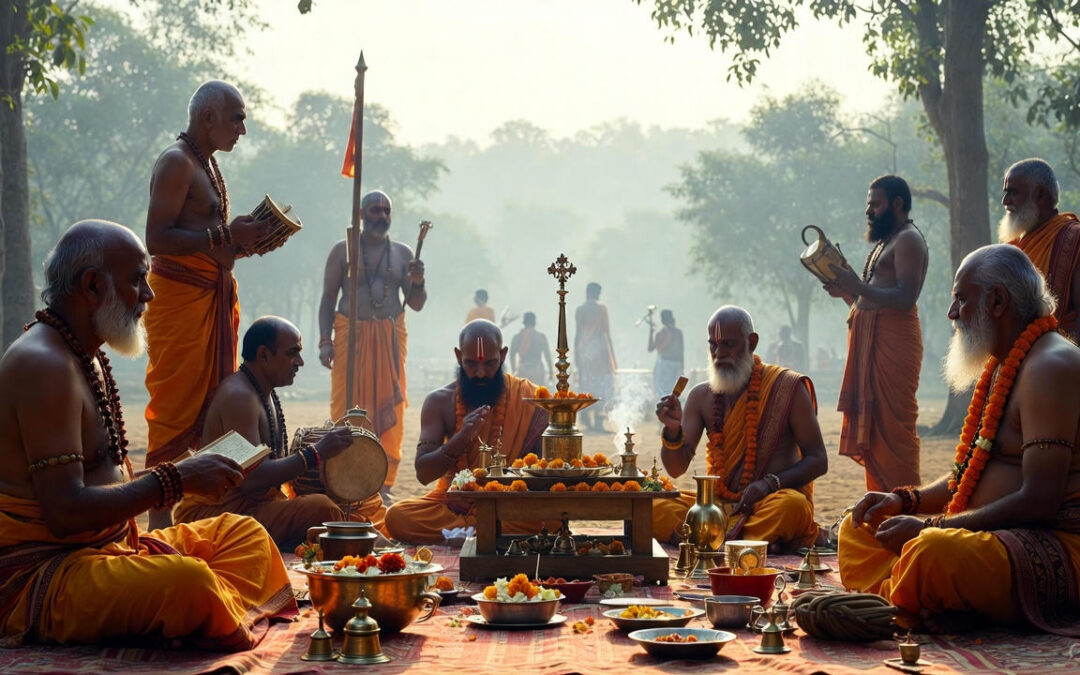
Imagine standing in the soft glow of dawn, the air thick with the scent of sandalwood and clarified butter. A circle of priests chants rhythmic verses, their voices weaving like threads of light. In the heart of it all burns a sacred fire—Agni, the divine messenger—devouring offerings of grains, herbs, and milk with a gentle roar. This isn’t just a ritual; it’s a conversation with the cosmos, a bridge between the earthly and the eternal. Welcome to the world of yajna, the sacred sacrifice, as taught in the Yajur Veda, one of the oldest whispers of Hindu wisdom. If you’ve ever wondered how ancient fires can light up modern lives, pull up a mat. Let’s journey together through smoke and mantra, discovering how these teachings aren’t dusty relics but living sparks for peace, purpose, and harmony.
The Roots of the Yajur Veda: A Veda Born for Action
Long before temples dotted the landscape or epics like the Ramayana unfolded their tales, the Vedas emerged as the breath of creation itself. Composed around 1500–1200 BCE by rishis—seers who “heard” these truths in deep meditation—the four Vedas form the bedrock of Hindu spirituality. The Rig Veda sings praises to the divine, the Sama Veda hums melodies of devotion, the Atharva Veda heals with herbs and spells, and then there’s the Yajur Veda, the practical heart of it all.
“Yajur” comes from yaj, meaning “to worship” or “to sacrifice.” This Veda isn’t about abstract philosophy alone; it’s a hands-on guide, a ritual playbook for connecting humans with the divine through action. Divided into two branches—the Krishna (Black) Yajur Veda, which mixes chants and explanations like a storyteller’s yarn, and the Shukla (White) Yajur Veda, clearer and more structured like a priest’s precise notes—it draws heavily from the Rig Veda’s hymns but adds prose mantras called yajus. These are the words spoken during offerings, turning every gesture into a prayer.
At its core, the Yajur Veda teaches that the universe itself is a grand yajna. Just as a seed surrenders to the soil to become a tree, every being offers itself to sustain the whole. Prajapati, the cosmic creator, performed the first sacrifice, birthing the three worlds—heaven, earth, and the space between—along with gods, humans, and creatures. “By yajna,” the Vedas declare, “Prajapati created the three worlds… By yajna the gods obtained immortality.” This isn’t mere myth; it’s a profound reminder of dharma—our duty to give back, to keep the wheel of life turning in balance.
Also read: Why Hanuman Inspires Millions
What is Yajna? Beyond the Fire: The Essence of Sacrifice
Picture yajna not as a grim offering but as a joyful exchange, like sharing a meal with beloved friends. In the Yajur Veda, sacrifice (yajna) means “worship through surrender,” both outer (physical offerings) and inner (letting go of ego). It’s performed in a havan kund—a small fire pit—where items like ghee (clarified butter), grains, fruits, and fragrant woods are offered to Agni. He, the fire god, acts as the postman, carrying these gifts to other devas like Indra (for strength) or Varuna (for order). But here’s the magic: the smoke rises, purifying the air, while the mantras vibrate, aligning your heart with the stars.
The Veda outlines yajna’s key elements simply:
- Dravya: The offering—pure, natural things symbolizing life’s bounty.
- Tyaga: The spirit of giving without expectation, echoing karma yoga from the Bhagavad Gita.
- Devata: The divine recipients, from Agni to all beings.
- Mantra: Sacred sounds that infuse power, like “For food thee, for strength thee! Ye are winds, ye are means.”
Yajnas evolved from simple home rites to grand spectacles, as detailed in texts like the Shatapatha Brahmana (a commentary on the White Yajur Veda). Early ones were spontaneous—pouring milk into a household fire for daily blessings. Over time, they grew complex, mirroring life’s layers. Here’s a quick look at types, from everyday to epic:
| Type of Yajna | Description | Purpose |
|---|---|---|
| Agnihotra | Daily dawn/dusk milk offering into fire. | Maintains cosmic rhythm, brings prosperity and health. |
| Darsha-Purnamasa | New/full moon rites with rice and ghee. | Honors lunar cycles, seeks forgiveness for missteps. |
| Soma Yajna | Pressing and offering juice from the soma plant (now often symbolic). | Invokes joy and immortality; a five-day feast of chants. |
| Ashvamedha | Rare horse release and symbolic sacrifice by kings. | Expands realms, renews dharma for society. |
| Pashubandha | Animal offering (now vegetarian substitutes in Kali Yuga). | Releases souls to higher planes, teaches non-attachment. |
And don’t forget the Five Great Sacrifices (Pancha Maha Yajna), a daily checklist for harmonious living:
- To all beings: Feed birds and animals—share your plate with nature.
- To humans: Offer hospitality to guests.
- To ancestors: Simple water or food libations for pitris.
- To gods: Light a lamp or incense.
- To knowledge: Study scriptures selflessly.
These aren’t rules to follow blindly; they’re invitations to weave sacrifice into your routine, fostering rita—the cosmic order that keeps chaos at bay.
Tales from the Flames: Stories That Ignite the Soul
The Yajur Veda isn’t a dry manual; it’s alive with stories that make yajna relatable, like bedtime tales with eternal lessons. Let’s dip into a few, drawn from its Brahmanas and echoed in Puranas.
Once, the gods and asuras (demons) were both mortal, lacking the spark of immortality. Desperate, they turned to Agni for help. “Build a fire within yourselves,” he advised. The gods offered oblations into their own hearts—surrendering pride and fear—while the asuras tried external tricks, like feeding each other. The gods triumphed, their inner fire blazing eternal. As the Shatapatha Brahmana explains, “The gods established the fire in their inmost self and… became immortal and unconquerable.” Lesson? True sacrifice starts inside, burning away what holds us back.
In the Ramayana, a Puranic gem rooted in Yajur Vedic rites, King Dasharatha aches for heirs. He performs the Putrakameshti yajna, guided by sage Rishyashringa. Offerings of pure ghee and mantras summon a divine figure from the fire, bearing a golden pot of payasam (sweet pudding) blessed by Bhagwan Vishnu. Shared with his queens, it births Rama and his brothers. This tale shows yajna as a catalyst for miracles, blending devotion with action—much like how the Veda promises, “You are energy, give me energy; you are courage, give me courage.”
Then there’s Prajapati’s grand act: In deep tapas (austerity), he sacrificed himself into all creation. “Having sacrificed himself in all living things and all living things in himself, he acquired greatness, self-radiance, and sovereignty,” says the Brahmana. Echoed in the Purusha Sukta (a Yajur Veda hymn), this illustrates karma—every offering ripples, connecting us to the divine web. Lesser-known? In regional variations, like Tamil Nadu’s Vedic schools, these stories blend with local lore, where yajna honors harvest gods, tying sacrifice to earth’s cycles.
Also read: Why Every Seeker Needs Shrimad Bhagavatam
The Heart of the Rite: Mantras, Do’s, and Gentle Don’ts
Performing yajna is like cooking a sacred meal—precision matters, but so does love. The Yajur Veda prescribes mantras chanted by priests: the Adhvaryu whispers prose for actions, the Hotar recites Rig hymns. A simple home havan might start with: “Om Agne naya supatha raye asman…” (O Agni, lead us on the right path to wealth). Repeat thrice, offering pinches of samagri (herb mix) into the fire.
Do’s for beginners:
- Choose a clean space, east-facing.
- Use eco-friendly woods like mango or ghee lamps.
- Invite family—yajna multiplies when shared.
- End with prasad distribution, symbolizing abundance.
Don’ts, with kindness:
- Avoid during eclipses or personal grief—honor the timing of muhurta.
- No animal harm in our age; opt for fruits or symbolic effigies.
- Speak truth; as the Veda warns, lies dim the fire’s light.
In global celebrations, like Bali’s Vedic yajnas or American yoga retreats, these adapt—Soma becomes herbal tea, Agni a candle—keeping the spirit alive.
Why Yajna Matters Today: Bridges to a Balanced Life
In our fast-scrolling world, where stress simmers like unchecked embers, the Yajur Veda’s yajna offers a reset button. Spiritually, it’s karma yoga in action: selfless giving purifies the soul, dissolving ego for moksha (liberation). “The yajna is the greatest benefactor,” says the Veda, bestowing life, wealth, and happiness.
Scientifically? Modern studies back the ancients. Burning ghee and herbs releases negative ions, purifying air and reducing microbes—up to 94% in some tests. It calms the mind, lowering cortisol for better focus, and even aids agriculture by enriching soil via ash. Environmentally, group yajnas combat pollution, as seen in India’s anti-smog havans.
Practical tips? Start small: A weekly five-minute fire meditation, offering a leaf with a gratitude breath. For families, tie it to festivals like Diwali’s Lakshmi puja. Benefits unfold in layers:
- Spiritual: Awakens inner Agni, fostering dharma and cosmic connection.
- Mental/Emotional: Builds resilience, like the gods’ immortality quest.
- Physical/Everyday: Boosts vitality—yajna-goers report clearer skin, sharper energy.
- Social: Strengthens bonds, echoing the Veda’s call to include all beings.
Regional twists? In Kerala, yajnas blend with Ayurveda for healing; in the Himalayas, they’re for rain prayers. Globally, eco-yajnas in the West honor Mother Earth, proving these teachings transcend borders.
A Flame That Never Fades: The Timeless Call to Offer
As the final embers glow, the Yajur Veda leaves us with this: Sacrifice isn’t loss; it’s expansion. In giving, we receive the universe’s embrace—peace in chaos, harmony in division. Whether you’re a curious teen lighting your first diya or a seeker pondering karma’s threads, yajna invites you home to the divine dance. Let Bhagwan Agni guide your steps, Maa Prithvi hold your offerings. In this eternal yajna of life, may you find the courage to surrender, the joy to give, and the light to shine for all. Om shanti, shanti, shanti.
Support us by purchasing from our Affiliate Links: