
The Essence of Narada Bhakti Sutras: Path of Pure Devotion
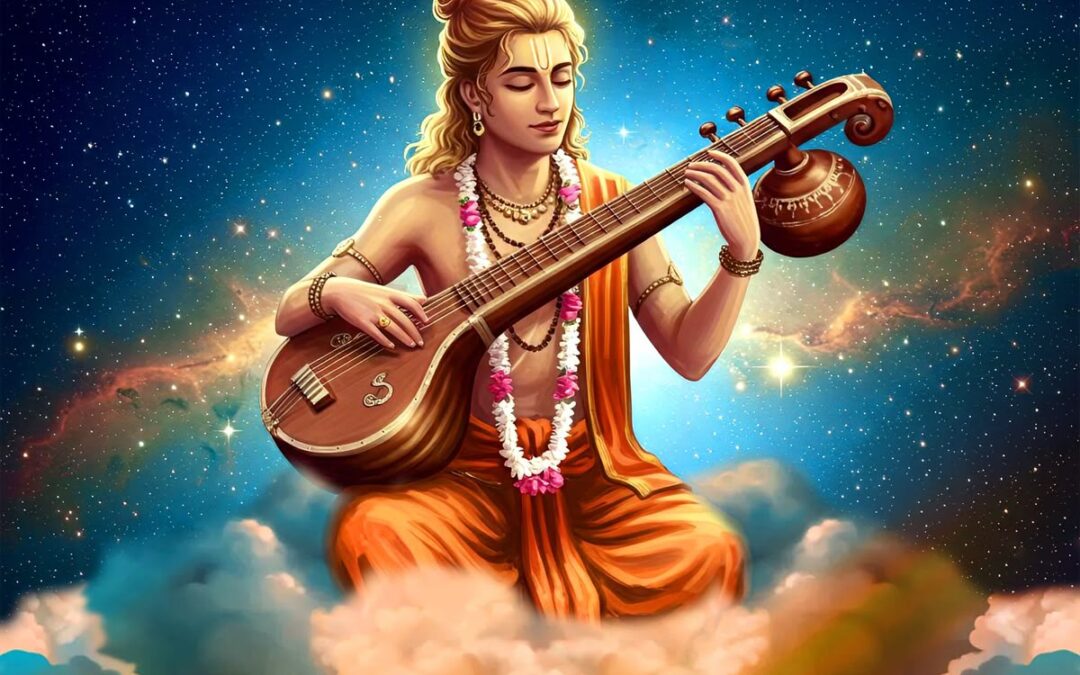
Imagine a wandering sage, his veena (a stringed instrument) always in hand, strumming melodies that echo through the heavens. This is Sage Narada, the eternal messenger of the gods, whose life was a symphony of devotion. One day, as he played his divine tunes for Bhagwan Vishnu, the Lord smiled and said, “Narada, your music stirs the soul, but true harmony comes from the heart’s silent surrender.” That moment captured the very pulse of bhakti—pure, unshakeable love for the Divine. If you’ve ever felt a quiet longing for something beyond the rush of daily life, a pull toward peace that words can’t quite touch, then the Narada Bhakti Sutras might just be the gentle guide you’ve been seeking. This ancient treasure, a collection of 84 crisp aphorisms, isn’t a dusty scripture to memorize; it’s a heartfelt invitation to love the Divine like a cherished friend, a beloved parent, or even a playful companion. In this post, we’ll journey through its wisdom, uncovering how this path of pure devotion can light up our world today.
Who Was Sage Narada? The Devotee Who Penned a Love Letter to the Divine
To understand the Narada Bhakti Sutras, we must first meet their author, Sage Narada. Picture him not as a stern monk, but as a joyful traveler across realms—earth, heaven, and beyond—always chanting “Narayana, Narayana” with every step. Born from the mind of Bhagwan Brahma, Narada is no ordinary sage; he’s the “gift to humanity,” a bridge between the mortal and the eternal. Ancient tales from the Puranas paint him as Bhagwan Vishnu’s devoted messenger, stirring devotion wherever he goes.
One lesser-known story from the Bhagavata Purana reveals Narada’s depth. Once, puffed with a touch of ego from his endless wanderings, Narada boasted to Bhagwan Vishnu about his unwavering bhakti. The Lord, ever kind, handed him a small pot of water and asked him to carry it across the universe without spilling a drop. As Narada dashed through stars and realms, a beautiful maiden caught his eye below. In that split second of distraction, the pot tipped—just a drop fell. Returning, Vishnu revealed the maiden was an illusion, teaching Narada that true devotion demands total focus, like a drop merging back into the ocean. This humbling tale underscores the sutras’ core: bhakti isn’t about grand shows; it’s about surrendering the ego, drop by drop, to the vast sea of divine love.
Composed around the 9th to 12th century CE during the blooming Bhakti movement in North India, the Narada Bhakti Sutras draw from timeless wells like the Vedas, Upanishads, and Bhagavata Purana. Unlike the analytical Brahma Sutras or the disciplined Yoga Sutras of Patanjali, these are poetic whispers on love—supreme, selfless love for Bhagwan, whether as Vishnu, Shiva, or the formless Brahman. Narada didn’t claim originality; he humbly notes the sutras were “taught by Lord Shiva,” weaving in insights from sages like Vyasa and Shandilya. This humility sets the tone: bhakti thrives on egoless sharing, not solitary hoarding.
Also read: The Churning of the Ocean: How Samudra Manthan Transforms Your Inner Struggles Today
Defining Bhakti: Not Just Faith, But a Heart’s Supreme Surrender
At its heart, the Narada Bhakti Sutras declare: “That (devotion) is indeed of the nature of supreme love in (directed towards) God.” Simple words, yet they unpack layers like an onion revealing its sweet core. Bhakti isn’t ritualistic duty or intellectual debate; it’s prema—love so pure it dissolves the self into the Beloved. As Sutra 3 explains, this love grants immortality, not in some distant heaven, but right here, in a soul freed from sorrow’s chains.
The text divides bhakti into stages, like steps on a flower-strewn path. First comes apara bhakti (inferior devotion), the beginner’s playground of practices. Then blooms para bhakti (supreme devotion), where love becomes effortless, like breathing. A key gem? The nine limbs of bhakti, inspired by the Bhagavata Purana:
- Sravana: Listening to tales of the Divine, like the Ramayana‘s heroic deeds of Bhagwan Rama.
- Kirtana: Singing praises, echoing Narada’s veena.
- Smarana: Constant remembrance, turning chores into quiet prayers.
- Padasevana: Serving the Lord’s feet, humbly aiding others as if for Him.
- Archanam: Worship with flowers and lamps, offered with a child’s glee.
- Vandanam: Prostrating in gratitude, bowing to life’s lessons.
- Dasyam: Selfless service, like Hanuman’s loyalty to Bhagwan Rama.
- Sakhyam: Friendship with the Divine, chatting with Krishna as a pal.
- Atmanivedanam: Total surrender, laying the heart bare.
These aren’t checkboxes; they’re dances inviting the Divine into every moment. Deeper still, the sutras connect bhakti to dharma (righteous living) and karma (actions’ fruits). By dedicating deeds to Bhagwan, we untangle karma’s knots, awakening to cosmic order—where every leaf’s fall whispers harmony.
Ancient Tales That Breathe Life into the Sutras
Stories are bhakti’s oxygen, and the Narada Bhakti Sutras shine brightest through them. Consider the Gopis of Vrindavan from the Bhagavata Purana, invoked in Sutra 21: “Just as the love of the Gopis of Vraja.” These cowherd women didn’t chase knowledge or powers; they simply yearned for young Krishna’s flute call. When He hid during the Ras Lila dance, their pangs of separation weren’t despair but ecstasy—a “excruciating pang” at forgetting Him, as Narada describes. This isn’t romantic fancy; it’s para bhakti’s fire, burning illusions to reveal oneness.
Another gem: Vibhishana, Ravana’s brother in the Ramayana, who chose dharma over kin for Bhagwan Rama. His surrender mirrors Sutra 73: “Among them (perfected devotees), there are no distinctions based upon caste, culture, beauty, family, wealth or profession.” Bhakti levels all, turning foes into family in the Divine’s embrace. These myths aren’t fairy tales; they’re mirrors, showing how ordinary hearts—like yours or a curious child’s—can harbor extraordinary love.
Also read: How Nachiketa Conquered Fear in the Katha Upanishad
Why Bhakti Matters Today: From Chaos to Cosmic Calm
In our whirlwind world of notifications and deadlines, the Narada Bhakti Sutras feel like a cool breeze. Sutra 33 urges: “Therefore, that supreme love for God alone is to be sought after by seekers of complete Liberation.” Amid anxiety and isolation, bhakti offers a lifeline. Modern studies echo this; practices like kirtana reduce stress, fostering mental health through mindful love. Imagine starting your day with smarana—recalling Bhagwan’s grace over coffee—instead of scrolling doom. It’s not escapism; it’s empowerment.
Practically, weave bhakti into life:
- For Busy Parents: Turn bedtime stories into sravana, sharing Krishna’s butter-thief antics to spark wonder in kids.
- For Stressed Workers: During commutes, practice dasyam—offer your efforts to Maa Lakshmi for abundance without attachment.
- For Seekers of Peace: Embrace sakhyam; journal “conversations” with the Divine, easing loneliness.
Benefits abound: Spiritually, it dissolves ego, aligning with karma yoga from the Bhagavad Gita. Scientifically, devotion boosts oxytocin, the “love hormone,” promoting empathy and resilience. Everyday? It transforms grudges into grace—Sutra 65: “Having dedicated all activities unto Him, one should turn all his desire, anger, pride, etc., towards him alone.”
Regionally, bhakti varies delightfully. In South India’s Tamil Nadu, Alvars sang Divya Prabandham hymns echoing Narada’s call. North India’s Bhakti saints like Mirabai poured para bhakti into songs for Bhagwan Krishna. Globally, celebrations like Krishna Janmashtami blend kirtana worldwide, proving devotion’s borderless joy.
Nurturing Bhakti: Gentle Rituals, Mantras, and Wise Do’s and Don’ts
The sutras aren’t abstract; they’re actionable. While no rigid rituals bind them, daily infusions build the flow. Start with a simple altar— a photo of Bhagwan Rama, fresh flowers— for archanam at dawn. Chant the Hare Krishna mantra (from the Bhagavata): “Hare Krishna, Hare Krishna, Krishna Krishna, Hare Hare / Hare Rama, Hare Rama, Rama Rama, Hare Hare.” It’s Narada’s veena in vocal form, steadying the mind like a lullaby.
Do’s for blooming bhakti:
- Surround with satsang (good company)—Sutra 38: “Primarily it (pure devotion) is gained through the grace of great souls.”
- Cultivate virtues: Non-violence, truth, compassion (Sutra 78).
- Surrender fruits: Work hard, but whisper, “This is for You, Bhagwan.”
Don’ts to prune weeds:
- Shun evil company (Sutra 44)—it fans lust and delusion like a spark to dry grass.
- Avoid vain debates (Sutra 74)—bhakti flowers in silence, not arguments.
- Don’t cling: Renounce anxiety over losses (Sutra 61).
These aren’t rules; they’re rivers guiding you home. For families, host monthly kirtana circles—sing, share stories, feel horripilation as Sutra 68 describes: “With throats choked with emotion, body covered with horripilation and tears flowing down.”
The Timeless Whisper: Love as the Ultimate Liberation
As the Narada Bhakti Sutras close in Sutra 84, faith in this path “gains the love of God and attains his objective.” What a promise! In a divided world, bhakti unites—across castes, creeds, continents—in the cosmic dance of dharma. It awakens us not to power, but to peace: seeing Bhagwan in every face, hearing His flute in the wind. Whether you’re a wide-eyed youth chasing dreams or a weary soul seeking rest, remember Narada’s veena: devotion isn’t earned; it’s remembered. Let it play softly in your heart, weaving threads of universal harmony. In that surrender, find not just liberation, but the joy of being utterly, divinely loved.
Support us by purchasing from our Affiliate Links: