
Unlocking the Mysteries of Brahman: A Deep Dive into the Svetasvatara Upanishad
Imagine sitting by a quiet river at dawn, the first rays of sun dancing on the water, and suddenly, a question bubbles up in your mind: What is the source of everything? Why does the world spin like this endless wheel, full of joy and sorrow? It’s a question that has whispered through the ages, from ancient sages in forest hermitages to curious minds in bustling cities today. This is the heart of the Svetasvatara Upanishad, a timeless gem from Hindu wisdom that invites us to explore Brahman—the infinite, all-encompassing reality behind the veil of our everyday lives. Like a gentle guide, this sacred text doesn’t just answer questions; it lights a path to inner peace, urging us to see the divine spark in ourselves and the universe.
In this blog, we’ll wander through the verses of the Svetasvatara Upanishad, uncovering its secrets like hidden treasures in an old chest. We’ll chat about its roots in ancient India, unravel the profound idea of Brahman, share enchanting metaphors that make these teachings come alive, and discover how this wisdom can soothe our modern souls. Whether you’re a young explorer dipping your toes into spirituality or a seasoned seeker longing for deeper truths, let’s embark on this journey together—step by step, with open hearts.
The Roots of Wisdom: A Glimpse into the Svetasvatara Upanishad’s World
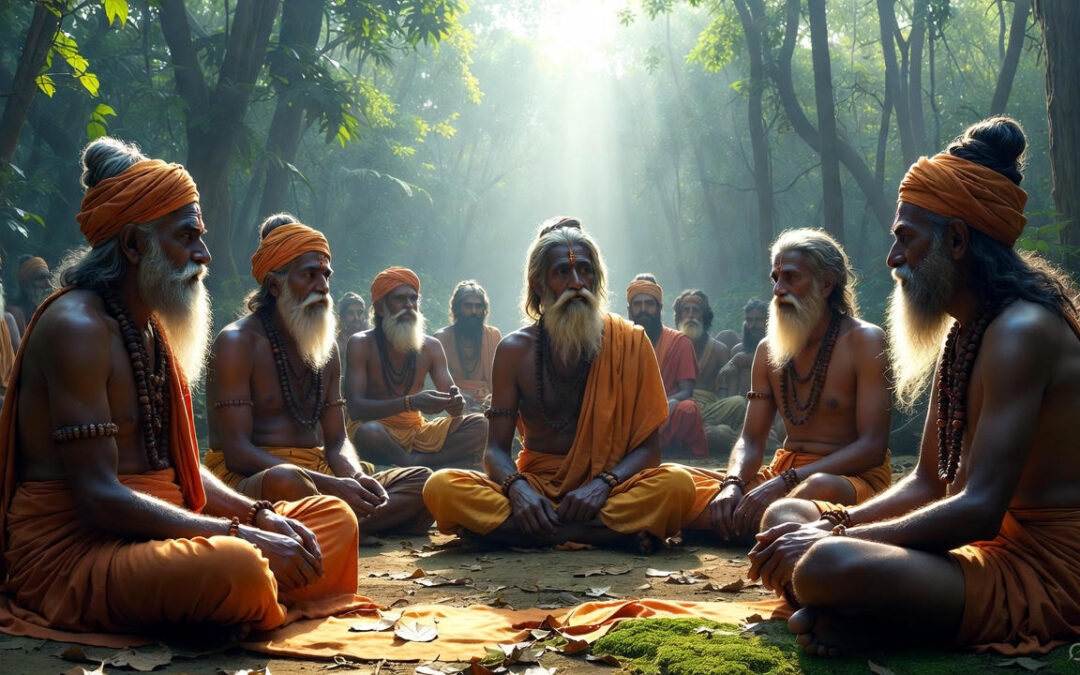
Picture a group of earnest students gathered around their teacher in a shady grove, their voices rising like birdsong: “Is Brahman the cause of all this? Where do we come from? By what power do we live and move?” These aren’t lines from a modern podcast—they’re the opening words of the Svetasvatara Upanishad, straight from Chapter 1, Verse 1. This text, one of the principal Upanishads, blooms from the Krishna Yajurveda, a branch of the ancient Vedas that dates back over 2,500 years. Composed around the 5th to 4th century BCE, it captures the late Upanishadic era, a time when thinkers like those who inspired the Buddha were pondering life’s big riddles.
The name “Svetasvatara” itself is poetic—it means “the one led by a white horse” or “white steed,” symbolizing purity and swift enlightenment, perhaps nodding to the sage Svetasvatara who revealed these truths to his disciples. Unlike the earlier Upanishads like the Brihadaranyaka or Chandogya, which weave grand philosophical debates, this one feels more intimate, like a heartfelt letter from the divine. It’s divided into six chapters with 113 verses, blending poetry, questions, and answers in a rhythmic flow that echoes the heartbeat of the cosmos.
What makes it special? It draws from the vast ocean of Vedic knowledge—the Rigveda for its hymns, the Atharvaveda for its mystic chants—while standing on its own as a bridge to later treasures like the Bhagavad Gita. Here, we meet Rudra, the compassionate form of Bhagwan Shiva, not as a distant deity but as the friendly force behind creation. The Upanishad isn’t just scripture; it’s a call to action, urging us to meditate and realize our oneness with Brahman. Lesser-known nugget: Some verses borrow from even older Vedic lines, like echoes proving its deep roots in tradition.
Brahman Unveiled: The Infinite Essence at the Heart of It All
At the core of the Svetasvatara Upanishad lies Brahman—not a god with a throne in the clouds, but the boundless reality that is everything. Think of Brahman as the silent ocean from which all waves rise and fall, the pure consciousness that dreams the world into being. Chapter 3, Verses 7 through 21, paints this picture vividly: Brahman is “the highest, the subtlest, the greatest,” hidden in every being like a secret flame. It’s formless yet all-pervading, changeless amid change, and kind—like the gentle rain that nourishes without asking for thanks.
One of the Upanishad’s gems is Verse 1.9: “The enjoyer, the enjoyed, and the relation-bringer—these three are declared to be Brahman.” Imagine a child playing with a toy car. The child (enjoyer), the car (enjoyed), and the invisible thread of imagination linking them (relation-bringer)—all three melt into one when you zoom out to the whole scene. That’s Brahman: not separate parts, but a seamless whole. Realizing this snaps the chains of illusion, turning our small “I” into the infinite Self.
Deeper still, the text introduces Maya, the creative power of Brahman, like a magician’s veil that tricks us into seeing separation. In Verse 4.9-10, Prakriti (nature) is called Maya, with the cosmic Self as its master—Maheshwara, the great lord. This isn’t about denying the world; it’s about seeing it as a divine play, full of colors from the three gunas: sattva (clarity, like morning light), rajas (energy, like a bustling market), and tamas (inertia, like a heavy fog). A lesser-known insight? Verse 4.5 uses a tender metaphor: an unborn feminine being (Prakriti) with three hues, loved by two masculine ones (cosmic and individual Self). It’s a cosmic love story, eternal and harmonious, reminding us that creation is born from unity, not conflict.
Tying into dharma and karma, the Upanishad whispers that actions rooted in ignorance bind us to the wheel of rebirth, but knowledge of Brahman frees us. It’s like upgrading from a bicycle to wings—suddenly, life’s ups and downs become a soaring view.
Also read: Unlock the Eternal Echo of Om: Mandukya Upanishad’s Guide to Consciousness and Inner Peace
Stories and Metaphors: Bringing Brahman to Life Like a Bedtime Tale
The Svetasvatara Upanishad shines brightest through its metaphors, turning abstract ideas into lively pictures anyone can grasp. Remember the “infinite wheel” in Verse 1.6? The universe is a grand chariot wheel, with one rim (undifferentiated reality), three layers (gunas), 16 spokes (senses and mind), and so on, all turned by Brahman’s hidden hand. We’re like passengers whirled around, but knowing the driver—Brahman—lets us step off into stillness.
Or take the fire-churning story in Verses 1.13-14. Picture two wooden sticks rubbed together: the lower one is your body, the upper is the sacred sound Om (Pranava). With steady friction—your focused meditation—sparks fly, revealing the hidden fire within, just as Brahman slumbers in the soul until awakened. It’s no dry lecture; it’s a hands-on adventure, like telling a child, “Rub those sticks, and watch the magic happen!”
Another charmer: Verse 1.15 compares realizing Brahman to extracting butter from milk, oil from sesame seeds, or water from hidden springs. These everyday wonders show the Self isn’t far off—it’s right here, waiting for truth (satya) and discipline (tapas) to draw it out. In a world of quick fixes, this teaches patience: true insight bubbles up slowly, like cream rising to the top.
These tales connect to broader myths, like the Ramayana’s quest for truth or the Mahabharata’s battlefield of the mind, where Arjuna learns to see the divine in all. They illustrate karma as the wheel’s motion—our choices spin it—but dharma aligns us with Brahman’s steady axis.
Breathing Brahman into Modern Days: Practical Wisdom for Busy Lives
Fast-forward to today: Amid traffic jams, screen glows, and endless to-do lists, how does the Svetasvatara Upanishad speak? Its teachings on Brahman offer a reset button for stressed souls. Knowing we’re all threads in one cosmic tapestry dissolves loneliness—next time you’re arguing with a friend, pause and see the shared spark. It’s spiritual awakening wrapped in simplicity: less “me vs. you,” more “we are one.”
Practical tips? Start with meditation, as Chapter 2 urges. Find a clean, breezy spot (your balcony works!), sit tall like a mountain, breathe softly, and chant Om. Let thoughts drift like clouds—don’t chase them. Over time, this quiets the mind’s chatter, unveiling inner peace. Science nods along: Studies link such practices to lower stress and sharper focus, echoing the Upanishad’s promise of clarity.
Benefits abound:
- Spiritual: Dissolves ego, sparking joy from within—like upgrading from borrowed happiness to your own light.
- Everyday: Builds resilience; when karma’s fruits sour (a tough day at work), remember Brahman’s kindness turns poison to nectar.
- Scientific Ties: The “wheel” metaphor mirrors quantum ideas of interconnectedness, where particles entwine like gunas in Maya.
Regionally, in South India, Shaivite temples chant these verses during Shivaratri, blending devotion with philosophy. Globally, yoga retreats from Bali to California draw on its postures and breaths, celebrating unity across cultures. Do’s: Embrace surrender—pray for grace, as in Verse 3.5, where seekers plead with Rudra for protection. Don’ts: Shun doubt; the text warns against endless questioning without action (meditation).
For rituals, try a simple evening puja: Light a lamp for Brahman’s light, offer fruits symbolizing the three gunas, and recite Verse 6.14: “He shines forth through whatever shines.” Mantras like “Om Namah Shivaya” invoke Rudra’s grace, harmonizing body and soul.
Also read: Isha Upanishad Revealed: How Ancient Wisdom Heals Modern Division
A Timeless Whisper: Harmony in the Heart of Brahman
As the sun dips low, casting golden hues over our river of thoughts, the Svetasvatara Upanishad leaves us with a soft, uplifting truth: In realizing Brahman, we find not just answers, but home. We’re not lost wanderers but eternal sparks of the infinite, dancing in divine play. This wisdom—rooted in ancient forests, blooming in modern hearts—calls us to live with kindness, see unity in diversity, and spread peace like ripples on water. May your journey reveal the Brahman within, fostering universal harmony where every breath is a hymn to oneness. Namaste—let that light shine.
Support us by purchasing from our Affiliate Links: