
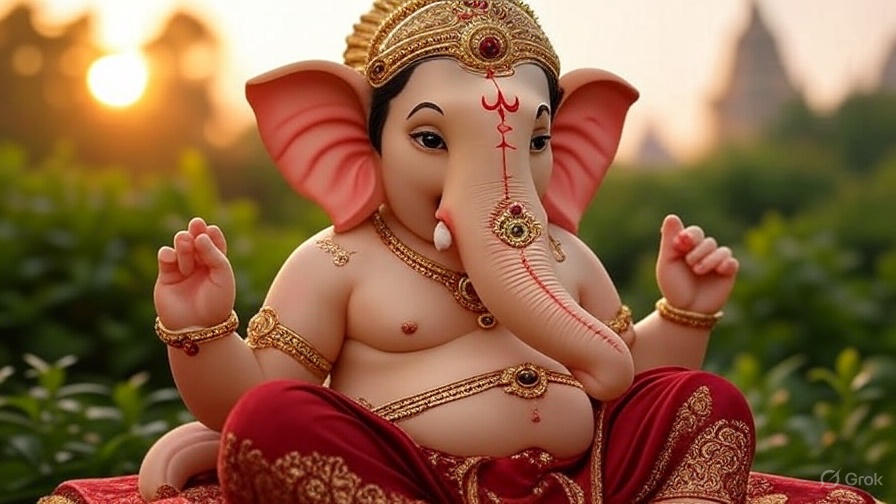
Why Ganesh Chaturthi Lasts 10 Days: Myths, Rituals, and Joy
Once upon a time, on the sacred Mount Kailash, Mata Parvati was preparing for her bath. She molded a boy from turmeric paste and breathed life into him. “Guard the door,” she instructed, “and let no one enter.” This boy was Bhagwan Ganesha, though he didn’t yet have his iconic elephant head.
When Bhagwan Shiva returned and tried to enter, the boy stood firm. In a moment of anger, Shiva severed the boy’s head. Mata Parvati, heartbroken, demanded her son’s revival. Shiva, realizing his error, sent his followers to find the head of the first creature facing north. They returned with an elephant’s head, which was placed on the boy’s body. Thus, Bhagwan Ganesha was reborn as the remover of obstacles and lord of wisdom.
The gods and sages celebrated for ten days, showering him with offerings. This divine joy is mirrored on earth during Ganesh Chaturthi, a vibrant festival that spans ten days. Let’s explore why this celebration lasts ten days, diving into its myths, rituals, and regional flavors.
The Myth Behind the 10-Day Celebration
Why does Ganesh Chaturthi last 10 days? The answer lies in ancient stories. After Ganesha’s revival, the deities worshipped him for ten days to honor his new form. This period symbolized completeness, reflecting the ten directions of the universe.
Another tale ties the festival to the Mahabharata. Sage Ved Vyasa needed a scribe to write the epic without pausing. Bhagwan Ganesha agreed, but only if Vyasa narrated continuously. For ten days and nights, Ganesha wrote tirelessly, his body heating up. Devotees applied clay to cool him, which is why idols today are made of clay. When the task ended on the tenth day, the Mahabharata was complete, cementing Ganesha’s role as the god of intellect.
These stories explain why the festival spans ten days, a time to celebrate wisdom, patience, and new beginnings.
The Spiritual Significance of 10 Days
In Hindu traditions, the number ten holds deep meaning. It represents the ten senses guiding human life or the ten directions of the cosmos. The 10-day Ganesh Chaturthi celebration mirrors this completeness.
Each day builds devotion, allowing devotees to connect with Bhagwan Ganesha. The festival teaches patience and reflection, as people pray to remove obstacles in studies, work, or relationships. By the tenth day, devotees feel renewed, ready for fresh starts.
Also read: The Hidden Lessons of Bhagwan Ganesha Elephant Head and More
Daily Rituals Over the 10 Days
Day 1: Welcoming Bhagwan Ganesha
The festival begins with excitement. Families clean their homes, preparing for a divine guest. On the first day, called Ganesh Sthapana, a clay idol of Bhagwan Ganesha is brought home or installed in public pandals.
A priest or elder performs the Pran Pratishta ritual, chanting mantras to invoke life into the idol. Flowers, fruits, and sweets like modak—Ganesha’s favorite—are offered. The aarti, “Vakra-Tunda Maha-Kaya,” fills the air, praising his curved trunk and radiant form.
This day marks Ganesha’s arrival to bless devotees, setting the tone for the ten days.
Days 2–5: Worship and Community Bonding
The next few days focus on daily worship. Mornings start with bathing the idol using milk, honey, and yogurt. Devotees offer durva grass and fresh flowers, believed to please Bhagwan Ganesha.
Evenings bring the magic of aarti. Lamps are waved in circles, and bhajans echo through homes. Families prepare modaks—steamed dumplings with coconut and jaggery—as prasad. The aroma draws neighbors to join in, strengthening community ties.
These days emphasize inner reflection. People pray for success in personal goals, free from obstacles.
Days 6–9: Deepening Devotion
By the sixth day, the festival deepens. The Uttar Puja involves special prayers to thank Bhagwan Ganesha. Offerings include bananas, coconuts, and betel leaves, symbolizing abundance.
Public pandals buzz with energy. Cultural programs feature dances and plays about Ganesha’s life, like how he outwitted his brother Kartikeya by circling his parents, proving wisdom over speed. Children craft clay idols, learning devotion through creativity.
In many homes, women fast, eating only fruits and milk, to seek blessings for their families. These days highlight unity and gratitude.
Day 10: The Emotional Visarjan
The tenth day, Anant Chaturdashi, is the grand farewell. It coincides with worship of Bhagwan Vishnu, adding spiritual depth. The Visarjan Puja begins early, with families offering 21 modaks or laddoos for completeness.
Processions form, with drummers and dancers leading the way. Families carry the idol to a river, lake, or sea for immersion. As the clay dissolves, devotees chant, “Ganpati Bappa Morya, Pudhchya Varshi Lavkar Ya”—“O Ganesha, come early next year.”
Visarjan symbolizes impermanence. The idol, born from earth, returns to it, reminding us that all beginnings have ends, but Ganesha’s blessings endure.
Regional Flavors of Ganesh Chaturthi
Ganesh Chaturthi varies across India, like a river adapting to the land. Each region adds unique traditions, making the festival a tapestry of devotion.
-
Maharashtra: Mumbai’s pandals, like Lalbaugcha Raja, draw millions. Massive idols, some 20 feet tall, are worshipped with modaks and Bollywood-infused processions.
-
Karnataka: Known as Gowri-Ganesha Habba, it starts with Mata Gowri’s worship. Turmeric idols are immersed in wells, and feasts include kadubu (rice cakes).
-
Andhra Pradesh/Telangana: Called Vinayaka Chavithi, students pray for academic success, offering books to Ganesha. Immersion happens in rivers like the Godavari.
-
Goa: Known as Chovoth, families create matoli (fruit and flower canopies). Nevri (stuffed pastries) are offered, using eco-friendly clay idols.
-
Tamil Nadu: As Pillayar Chaturthi, it’s temple-focused. Devotees offer kozhukattai (similar to modaks) and fast quietly.
-
Kerala: Vinayaka Chathurthi is simple, with payasam and appam offered in homes or temples.
-
North India: In states like Rajasthan, pandals mimic Maharashtra’s style, with sweets like peda.
These variations show how Ganesh Chaturthi unites diverse communities through shared faith.
Also read: The Power of Ahimsa in Sanatana Dharma – Lessons from Lord Krishna and Scriptures
The Historical Roots of the 10 Days
The festival’s 10-day span also has historical significance. During the Maratha era, Chhatrapati Shivaji Maharaj promoted Ganesh Chaturthi to unite people against invaders. Public celebrations grew, blending devotion with strength.
In the 19th century, freedom fighter Lokmanya Tilak revived the festival in Maharashtra. He organized large-scale pandals during India’s independence struggle, using the ten days to foster unity and cultural pride. This legacy made Ganesh Chaturthi a symbol of resilience.
The Modern Eco-Friendly Twist
Today, Ganesh Chaturthi embraces eco-conscious practices. Devotees use biodegradable clay idols to protect rivers during visarjan. Some communities immerse idols in artificial ponds or plant trees as offerings.
This shift honors Bhagwan Ganesha as a protector of nature, blending tradition with environmental care.
Final Words:
The 10-day Ganesh Chaturthi celebration is a journey of faith, wisdom, and unity. From welcoming Bhagwan Ganesha to bidding him farewell, each day teaches patience, devotion, and respect for nature. Whether through myths, rituals, or regional customs, the festival binds millions in joy.
How do you celebrate Ganesh Chaturthi? Share your traditions in the comments or explore more Hindu festival stories on our blog!
Support us by purchasing from our Affiliate Links: