
The Sacred Power of Ucchistha Ganapati: A Spiritual Journey
Bhagwan Ganesha, the remover of obstacles and the lord of beginnings, is worshipped in many forms across India. Among His numerous divine manifestations, Ucchistha Ganapati holds a unique and profound place in Hindu spirituality. This form of Bhagwan Ganesha is deeply revered in certain tantric traditions but remains less known to the common devotee. In this blog post, we explore the origin, meaning, appearance, worship practices, and reasons why Ucchistha Ganapati is not commonly worshipped by all. Let’s dive into the sacred mystery of this divine form.
The Origin of Ucchistha Ganapati
The story of Ucchistha Ganapati is rooted in ancient Hindu scriptures, particularly in tantric texts like the Ucchishta Ganapatyashtakam and other esoteric traditions. The term “Ucchistha” comes from Sanskrit, meaning “leftover” or “that which remains.” This name reflects the divine act associated with Bhagwan Ganesha in this form.
According to legend, once Mata Parvati, the divine mother, was performing a sacred ritual. During this ritual, She offered food to Bhagwan Ganesha, who consumed it with great joy. However, some food particles remained on His hands and mouth. Instead of discarding these remnants, Bhagwan Ganesha, in His infinite wisdom, declared that even the leftover offerings were sacred and powerful. This act gave rise to the form of Ucchistha Ganapati, symbolizing that nothing associated with the divine is impure or unworthy. In this form, Bhagwan Ganesha teaches devotees the importance of seeing divinity in everything, even in what may seem ordinary or leftover.
In some tantric traditions, it is also believed that Ucchistha Ganapati emerged to guide advanced spiritual seekers in their pursuit of liberation. This form is considered a powerful embodiment of Bhagwan Ganesha’s ability to transcend conventional notions of purity and impurity, emphasizing the unity of all creation.
The Meaning of Ucchistha Ganapati
The name Ucchistha Ganapati carries deep spiritual significance. “Ucchistha” refers to the remnants of offerings, such as food or ritual items, that have been touched or partially consumed during worship. In most traditions, such remnants are considered sacred but are handled with specific rules. Ucchistha Ganapati, however, represents the divine acceptance of these remnants, symbolizing that the divine is beyond human concepts of purity and impurity.
This form of Bhagwan Ganesha is often associated with tantric practices, which focus on transcending dualities like pure and impure, good and bad, or sacred and mundane. Ucchistha Ganapati teaches devotees to embrace all aspects of life as divine and to seek spiritual growth by going beyond societal norms and limitations. For spiritual aspirants, worshipping Ucchistha Ganapati is a path to attaining higher consciousness and breaking free from worldly attachments.
Also read: The Hidden Lessons of Bhagwan Ganesha Elephant Head and More
The Appearance of Ucchistha Ganapati
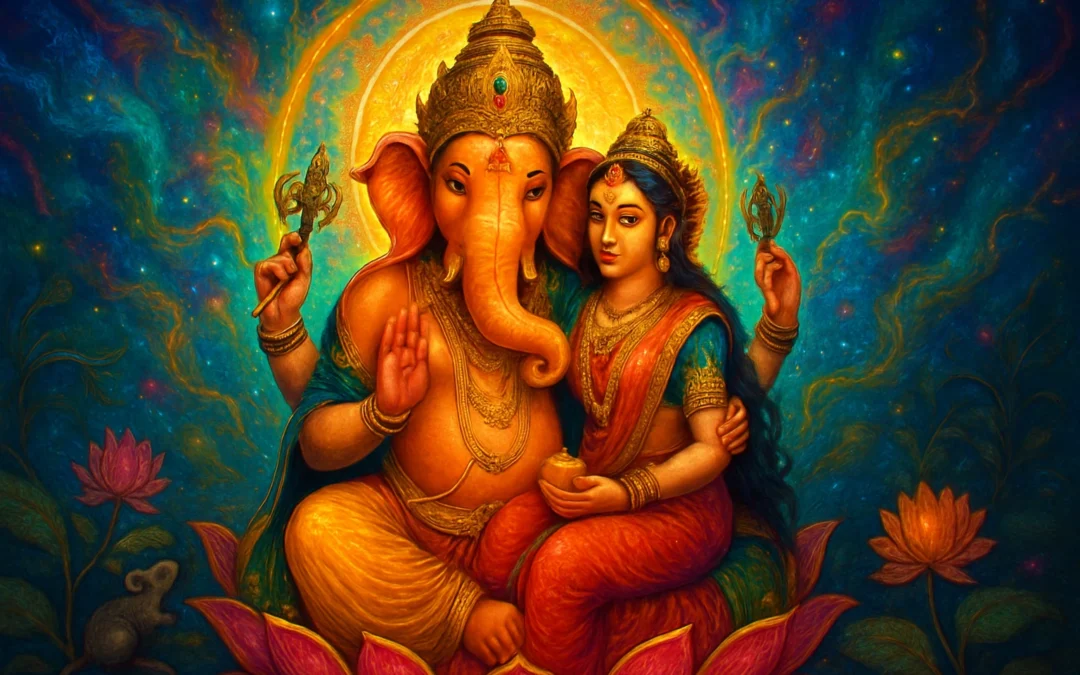
Ucchistha Ganapati is depicted in a unique and striking form, distinct from the more familiar images of Bhagwan Ganesha. In this form, He is often shown with four or six arms, symbolizing His immense power and divine abilities. His complexion is typically described as blue or dark, representing His connection to the infinite and the transcendental.
In His hands, Ucchistha Ganapati holds sacred items such as a pomegranate, a blue lotus, a japa mala (prayer beads), and sometimes a veena (musical instrument), symbolizing wisdom, devotion, and creativity. In some depictions, He is shown holding a modaka (sweet) or other offerings, emphasizing His association with remnants. His trunk is often curved, and His expression is serene yet powerful, radiating divine grace.
A significant aspect of Ucchistha Ganapati’s iconography is the presence of His Shakti, or divine consort, seated on His lap. In some traditions, She is depicted as Mata Siddhi or another form of divine feminine energy. This emphasizes the tantric principle of the union of masculine and feminine energies, representing the balance of creation and spiritual power.
Unlike the traditional image of Bhagwan Ganesha with a single tusk, Ucchistha Ganapati is sometimes shown with both tusks intact, symbolizing completeness and perfection. His form is both awe-inspiring and approachable, inviting devotees to connect with Him on a deeper spiritual level.
Why the Common Man Cannot Worship Ucchistha Ganapati
While Bhagwan Ganesha is widely worshipped by all, Ucchistha Ganapati is primarily revered in specific tantric and esoteric traditions. There are several reasons why this form is not commonly worshipped by the general public.
- Tantric Nature of Worship: Ucchistha Ganapati is deeply associated with tantric practices, which require strict discipline, initiation (diksha), and guidance from a qualified guru. Tantric worship often involves complex rituals, mantras, and meditative practices that are not suitable for everyone. Without proper initiation, attempting to worship Ucchistha Ganapati may not yield the desired spiritual results and could even be harmful.
- Concept of Purity and Impurity: The worship of Ucchistha Ganapati challenges conventional notions of purity. In traditional Hindu practices, offerings and rituals are conducted with strict adherence to cleanliness and purity. Ucchistha Ganapati, however, embraces the idea of divinity in remnants, which may be difficult for the common devotee to understand or accept. This philosophical depth requires a mature spiritual mindset.
- Powerful Energy: The energy of Ucchistha Ganapati is considered intense and transformative. For those unprepared or lacking proper guidance, invoking this form of Bhagwan Ganesha can be overwhelming. It is believed that only those who have advanced in their spiritual practice can handle the potent vibrations of His energy.
- Secrecy in Tantric Traditions: Many tantric practices, including the worship of Ucchistha Ganapati, are kept secret and shared only with initiated disciples. The rituals, mantras, and methods of worship are not openly disclosed, making it inaccessible to the general public.
For these reasons, Ucchistha Ganapati is primarily worshipped by advanced spiritual practitioners, tantric sadhaks, and those who have received proper initiation from a guru.
Also read: Why Upanishads Matter: Differences from Vedas, Puranas, and More
How Ucchistha Ganapati Is Worshipped
The worship of Ucchistha Ganapati is a sacred and intricate process, typically performed under the guidance of a tantric guru. The rituals are detailed and require a deep understanding of tantric principles. Here is an overview of how Ucchistha Ganapati is worshipped:
- Initiation (Diksha): The first step in worshipping Ucchistha Ganapati is receiving initiation from a qualified guru. The guru imparts specific mantras and teaches the devotee the correct methods of worship, ensuring that the practice is safe and effective.
- Mantra Sadhana: The worship of Ucchistha Ganapati involves chanting specific mantras, such as the Ucchishta Ganapati mantra. These mantras are powerful and are chanted with intense focus and devotion, often for a specific number of repetitions (japa). The mantra is believed to invoke the divine presence of Bhagwan Ganesha and align the devotee’s energy with His.
- Offerings: Offerings to Ucchistha Ganapati are unique and differ from traditional offerings to Bhagwan Ganesha. While modakas and laddoos are commonly offered to Ganesha, Ucchistha Ganapati is often offered items like pomegranates, betel leaves, and other symbolic foods. In some traditions, remnants of food or partially consumed offerings are considered sacred and are used in the worship.
- Yantra Worship: A yantra, or sacred geometric diagram, representing Ucchistha Ganapati is often used in worship. The yantra is energized through specific rituals and serves as a focal point for meditation and invocation of the deity’s energy.
- Meditation and Visualization: Devotees meditate on the form of Ucchistha Ganapati, visualizing His divine attributes and the presence of His Shakti. This practice helps the devotee connect with the deeper spiritual significance of this form and attain higher states of consciousness.
- Tantric Rituals: The worship may involve specific tantric rituals, such as homa (fire offerings) or other esoteric practices, performed at auspicious times. These rituals are designed to purify the devotee and align them with the divine energy of Ucchistha Ganapati.
The worship of Ucchistha Ganapati is a deeply transformative practice that requires dedication, discipline, and surrender to the divine. It is said to grant spiritual wisdom, remove obstacles, and lead the devotee toward liberation.
The Spiritual Significance of Ucchistha Ganapati
Ucchistha Ganapati holds a special place in Hindu spirituality as a symbol of the all-encompassing nature of the divine. His worship teaches devotees to see divinity in every aspect of life, even in what may seem impure or insignificant. This form of Bhagwan Ganesha reminds us that the divine is present in all things, and true spirituality lies in transcending dualities and embracing the unity of creation.
For tantric practitioners, Ucchistha Ganapati is a guide to higher consciousness, helping them overcome worldly attachments and attain spiritual liberation. His form also emphasizes the importance of the guru-disciple relationship, as proper guidance is essential for navigating the complexities of tantric worship.
Final Words:
Ucchistha Ganapati is a powerful and sacred form of Bhagwan Ganesha, revered in tantric traditions for His ability to transcend conventional notions of purity and guide devotees toward spiritual awakening. His origin, rooted in the acceptance of remnants, teaches us to find divinity in all aspects of life. While His worship is not meant for everyone due to its tantric nature and intense energy, those who are initiated into His practice find profound wisdom and transformation.
Through His unique appearance, powerful mantras, and sacred rituals, Ucchistha Ganapati continues to inspire spiritual seekers to look beyond the ordinary and connect with the divine in its purest form. May Bhagwan Ganesha, in all His forms, bless us with wisdom, strength, and the courage to walk the path of spirituality.
Support us by purchasing from our Affiliate Links: