
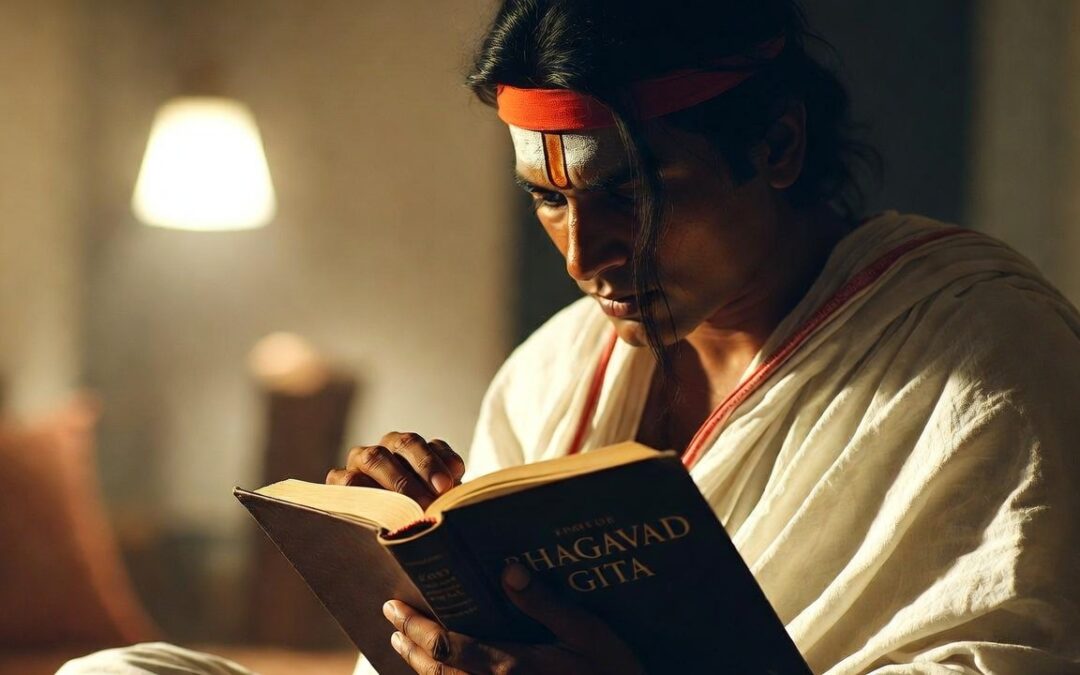
Sankhya Yoga: Unlocking the Secrets of True Knowledge in the Bhagavad Gita
Imagine standing on a vast battlefield, surrounded by the clamor of warriors, chariots, and trumpets. Your heart races, your mind spins with doubt, and everything you thought you knew about life crumbles before your eyes. This is where Arjuna finds himself in the epic Mahabharata – frozen in fear, questioning his duty. But then, Bhagwan Krishna steps in, not with weapons, but with words of profound wisdom. This moment births Sankhya Yoga, the path of knowledge that cuts through illusion like a sharp sword. If you’ve ever felt lost in the chaos of modern life, wondering “Who am I really?” or “What’s the point of it all?”, Sankhya Yoga offers timeless answers. Let’s dive into this ancient philosophy, exploring its depths in a way that’s easy to grasp, like sharing stories around a campfire.
What is Sankhya Yoga? A Simple Breakdown
Sankhya Yoga, often called the Yoga of Knowledge, is one of the foundational pillars of Hindu philosophy. The word “Sankhya” comes from Sanskrit, meaning “enumeration” or “discernment.” It’s all about analyzing and understanding the difference between the eternal soul (Purusha) and the temporary material world (Prakriti). Think of it like sorting puzzle pieces: You separate what’s real and lasting from what’s just a passing shadow.
In the Bhagavad Gita, which is part of the Mahabharata, Sankhya Yoga is detailed in Chapter 2. Here, Bhagwan Krishna teaches Arjuna that true knowledge isn’t about memorizing facts but realizing the soul’s immortality. He says the body is like a worn-out garment – we change it, but the soul remains unchanged. This isn’t some abstract idea; it’s a practical tool for living without fear. For beginners, picture your mind as a stormy ocean. Sankhya helps calm the waves by showing that the storm (life’s ups and downs) isn’t you – you’re the unchanging sky above.
Also read: The Powerful Story of Arjuna Vishada Yoga Explained
Historical and Scriptural Roots of Sankhya Yoga
To truly appreciate Sankhya Yoga, we need to travel back in time. Its origins trace to the ancient Vedas, the oldest scriptures of Hinduism, composed thousands of years ago. The Rig Veda hints at dualities like spirit and matter, but it’s in the Upanishads where these ideas blossom. For instance, the Katha Upanishad describes the soul as the rider in a chariot, with the body as the vehicle and senses as horses – a metaphor that echoes in the Gita.
The full system of Sankhya philosophy was systematized by Sage Kapila, believed to be an incarnation of Bhagwan Vishnu. In the Puranas, like the Bhagavata Purana, Kapila teaches his mother Devahuti about the 25 elements of creation: from earth and water to the ego and intellect. These aren’t just lists; they’re a map of how the universe works. Sankhya is atheistic in a way – it doesn’t rely on a personal deity for explanations – but in the Gita, Bhagwan Krishna weaves it with devotion (Bhakti), making it accessible.
A lesser-known fact: Sankhya influenced not just yoga but also Buddhism and Jainism. It’s like the backbone of Indian thought, emphasizing logical analysis over blind faith. In the Mahabharata, during the Kurukshetra war, Arjuna’s crisis isn’t just about fighting family; it’s a spiritual dilemma. Bhagwan Krishna uses Sankhya to remind him: “The soul is neither born nor dies; it’s eternal.” (Gita 2.20) This verse, drawn from Upanishadic wisdom, shifts Arjuna from despair to clarity.
Ancient Stories and Myths Illustrating Sankhya Principles
Stories make philosophy come alive, don’t they? Let’s look at a tale from the Puranas that mirrors Sankhya’s teachings. In the story of King Janaka from the Brihadaranyaka Upanishad, the king dreams he’s a beggar, starving and chased by tigers. He wakes up terrified, asking, “Am I the king or the beggar?” Sage Yajnavalkya explains: Neither – you’re the eternal witness beyond dreams and waking states. This is pure Sankhya: Distinguishing the observer (soul) from the observed (world).
In the Bhagavad Gita itself, Arjuna’s story is the ultimate myth. As the Pandava prince, he’s a skilled warrior, but on the battlefield, he drops his bow, Gandiva, overwhelmed by attachment. “How can I kill my teachers and kin?” he cries. Bhagwan Krishna responds with Sankhya: Bodies perish, but souls are indestructible. He compares life to changing clothes or seasons – inevitable cycles. A fun twist: In some regional folklore from Bengal, Arjuna is depicted as a reluctant hero who finds peace through Krishna’s words, inspiring local plays during festivals.
Another gem from the Mahabharata: The tale of the Yaksha’s questions to Yudhishthira. One riddle – “What is the most wonderful thing?” – gets answered as: “People see death everywhere but live as if immortal.” This ties into Sankhya’s call to wake up from ignorance (Avidya) and embrace true knowledge (Jnana).
The Significance of Sankhya Yoga in Modern Life
In today’s fast-paced world, Sankhya Yoga isn’t just ancient wisdom; it’s a survival kit. It teaches us to detach from outcomes, reducing stress and anxiety. Scientifically, this aligns with mindfulness practices – studies show meditation on impermanence lowers cortisol levels. Spiritually, it connects to Dharma (righteous duty) and Karma (action without attachment). By understanding Prakriti (nature’s flux) and Purusha (unchanging self), we navigate life’s chaos with poise.
Practically, apply it like this: Facing a job loss? Remember, your worth isn’t your role – that’s Prakriti changing. Your soul remains whole. Or in relationships, Sankhya encourages seeing beyond physical forms to the divine spark in everyone, fostering empathy.
Regional variations add flavor. In South India, during Tamil Nadu’s temple festivals, Sankhya is discussed in discourses linking it to Bhagwan Vishnu’s avatars. Globally, it’s celebrated in yoga retreats from California to Bali, where practitioners chant Gita verses for inner peace.
Rituals, Mantras, and Do’s and Don’ts for Practicing Sankhya Yoga
While Sankhya is more intellectual than ritualistic, incorporating it into daily life enhances its power. Start with meditation: Sit quietly, reflect on Gita verses like “You have a right to perform your prescribed duty, but you are not entitled to the fruits of action.” (Gita 2.47) Chant the mantra “Om Tat Sat” to invoke truth.
Do’s: Study scriptures daily, even 10 minutes; practice detachment in small ways, like not obsessing over social media likes; seek a guru for guidance.
Don’ts: Avoid ego-driven actions; don’t confuse knowledge with arrogance – true Jnana humbles you; steer clear of extremes, as Sankhya promotes balance.
In rituals, during Diwali or Navratri, recite Gita Chapter 2 to honor Maa Saraswati, the embodiment of knowledge.
Benefits of Embracing Sankhya Yoga: Spiritual, Scientific, and Everyday
The perks are endless! Spiritually, it leads to Moksha (liberation) by burning Karma through wisdom. Lesser-known: It awakens Kundalini energy, linking to cosmic order where everything is interconnected.
Scientifically, neuroscientists link detachment practices to better mental health, reducing depression. Everyday benefits: Improved focus at work, healthier relationships, and resilience – think of it as emotional armor.
A global note: In the West, Sankhya-inspired yoga classes boost well-being, with apps teaching Gita insights for stress relief.
Also read: Power of the Bhagavad Gita in Modern Life
5 Real-Life Lessons from Sankhya Yoga
Here are five practical lessons to weave into your daily routine:
- Embrace Impermanence: Life changes constantly – jobs, relationships, health. Like Arjuna learning bodies are temporary, remind yourself: “This too shall pass.” Apply it by journaling daily gratitudes, reducing attachment to outcomes.
- Act Without Attachment: Perform duties diligently but let go of results. In a career setback, focus on effort, not success. This builds resilience, as Bhagwan Krishna advises, turning failures into growth.
- Discern the Real from the Illusion: Question: Is your stress from reality or perception? Sankhya teaches separating soul from ego. In conflicts, pause and ask, “What’s eternal here?” It fosters peace.
- Cultivate Self-Knowledge: Know your true self beyond roles. Meditate on “Who am I?” daily. This lesson combats identity crises, leading to authentic living and spiritual awakening.
- Live in Harmony with Dharma: Align actions with righteousness. In decisions, weigh Karma’s impact. This creates positive cycles, promoting universal harmony in a divided world.
A Timeless Message of Peace and Wisdom
As we wrap up, remember Sankhya Yoga isn’t about escaping life but engaging fully with clarity. In a world of distractions, it whispers: You’re more than your struggles; you’re eternal light. By embracing this knowledge, we honor the cosmic dance of creation, finding peace amid turmoil. May this wisdom guide you toward inner harmony, reminding us all that true knowledge unites us in the grand tapestry of existence.
Support us by purchasing from our Affiliate Links:
The Complete Book of Yoga: KARMA YOGA | BHAKTI YOGA | RĀJA YOGA | JNĀNA YOGA
Arthashastra By Kautilya – A Masterpiece On Economic Policies