
10 Fascinating Facts About Makar Sankranti
Have you ever gazed at the sky on a crisp winter morning, watching colorful kites dance in the wind, and wondered about the deeper magic behind it all? Imagine a day when the sun itself seems to shift its path, bringing warmth, hope, and a fresh start to everyone below. That’s the essence of Makar Sankranti, a festival that lights up hearts across India and beyond. It’s not just about flying kites or savoring sweet treats—it’s a timeless celebration of nature’s rhythms, ancient wisdom, and the quiet power of renewal. Let’s journey together through its stories, meanings, and joys, like sharing tales around a cozy bonfire.
The Ancient Roots: A Glimpse into India’s Timeless Past
Picture this: Thousands of years ago, in the vast landscapes of ancient India, wise sages observed the stars and the sun with wonder. They noticed how the sun’s journey across the sky marked the changing seasons, influencing everything from crops in the fields to the flow of life itself. Makar Sankranti finds its origins in these early observations, deeply woven into the fabric of Hindu scriptures.
In the Vedas, the oldest sacred texts of Hinduism, the sun is revered as Bhagwan Surya, the giver of life and light. One beautiful hymn from the Rigveda praises Bhagwan Surya as the eye of the universe, illuminating the path for all beings. The festival ties back to this reverence, celebrating the sun’s entry into the zodiac sign of Makara, or Capricorn. This moment signals the end of the cold, inward-focused winter and the beginning of longer, brighter days—a shift called Uttarayana.
Diving deeper into the Puranas, those grand collections of myths and legends, we find echoes of Makar Sankranti in stories of cosmic balance. One tale speaks of Bhagwan Vishnu, the preserver of the universe, who on this day buried the heads of powerful demons under a sacred mountain, symbolizing the triumph of good over evil. Another story tells of Bhagwan Surya visiting his son Shani, the lord of Makara, despite their differences. This father-son reunion teaches us about forgiveness and family bonds, reminding us that even celestial beings value harmony.
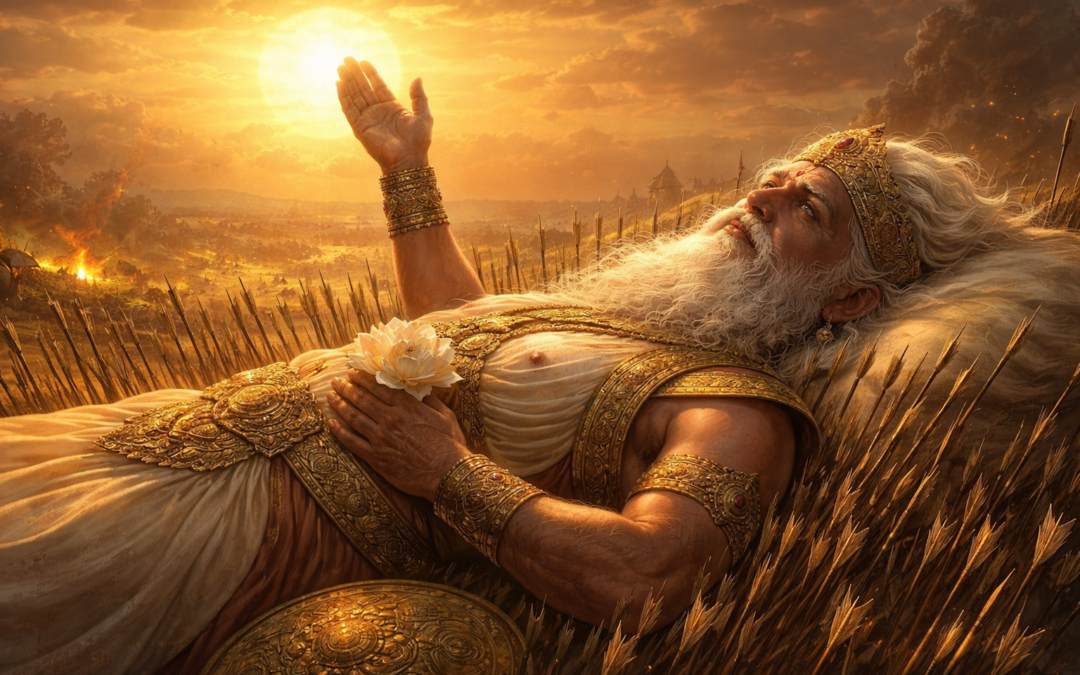
Now, let’s travel back to the epic times of the Mahabharata and Ramayana, where Makar Sankranti holds special relevance. In the Mahabharata, the great warrior Bhishma Pitamah’s story is intricately linked to this festival, highlighting its profound spiritual significance. Bhishma, the grandsire of both the Pandavas and Kauravas, was a paragon of dharma—unwavering duty and righteousness. During the epic battle of Kurukshetra, on the tenth day, Bhishma was felled by Arjuna’s arrows, lying on a bed of arrows that pierced his body. Thanks to a boon from his father, Shantanu, Bhishma had the gift of ichha-mrityu, the ability to choose the moment of his death.
Rather than departing immediately, Bhishma chose to wait for the auspicious period of Uttarayana to begin. Why this specific time? In ancient Hindu belief, as explained in the Bhagavad Gita (Chapter 8), there are two paths for the soul after death: the path of light (associated with Uttarayana) leading to liberation or higher realms, and the path of darkness (Dakshinayana) leading back to rebirth. Bhishma, ever the devotee of dharma, wanted his soul to attain moksha, freedom from the cycle of birth and death. He lay on that arrow bed for 58 days, enduring immense pain, imparting wisdom to Yudhishthira on kingship, ethics, and life. He recited the Vishnu Sahasranama, a thousand names of Bhagwan Vishnu, as a final act of devotion.
Authentically, while many popular narratives associate Bhishma’s departure directly with Makar Sankranti, a closer look at scriptural and astronomical details reveals nuance. The Mahabharata occurred around 5,000 years ago, when Uttarayana aligned with the winter solstice (around December 21 in today’s calendar), not the current Makar Sankranti date (January 14-15). Due to the precession of the equinoxes—a slow shift in Earth’s axis—the tropical zodiac has moved over millennia. Bhishma’s actual death tithi is observed as Bhishma Ashtami, on Magha Shukla Ashtami, about a month after the modern Makar Sankranti. This day honors his passing, with rituals like tarpan (offerings to ancestors) performed in his memory. Yet, the festival’s spirit remains tied to Bhishma’s choice, symbolizing patience, devotion, and alignment with cosmic order. His story illustrates how Makar Sankranti represents not just seasonal change but a gateway to spiritual elevation, blending karma (actions) with divine timing.
Though less directly mentioned in the Ramayana, the era’s spirit connects through themes of duty and devotion. Bhagwan Rama’s exile mirrored the sun’s southward journey, a time of trials, much like Dakshinayana. His return to Ayodhya, triumphant and enlightened, parallels the northward shift of Uttarayana, symbolizing victory and renewal. Ancient regions like Gandhara, mentioned in both epics, hint at how festivals like this united diverse lands under shared spiritual skies. These connections aren’t just historical footnotes; they show how Makar Sankranti has been a beacon of hope during India’s most legendary times, blending astronomy, mythology, and everyday life.
Also read: Yajur Veda on Sacrifices for Peace and Prosperity
Myths and Stories: Tales That Bring the Festival to Life
Every festival needs its enchanting stories, and Makar Sankranti is rich with them. Let’s sit by an imaginary riverbank and recount a few, as if sharing secrets from the ancients.
One popular myth revolves around Maa Sankranti, a fierce form of the divine feminine. Long ago, a demon named Sankarasur terrorized the earth, spreading darkness and fear. Maa Sankranti descended, battling the beast with unyielding courage, and slayed him on this very day. The next day, she defeated his ally, Kinkarasur. These victories represent the festival’s core theme: the eternal battle between light and shadow, where righteousness always prevails. It’s a reminder that within us, too, we can conquer our inner demons through devotion and discipline.
Another heartwarming legend involves Bhagwan Surya and Shani. Though father and son often clashed—Surya representing vitality and Shani embodying challenges—they reunite on Makar Sankranti. Surya visits Shani’s home in Makara, bridging their gap. This story teaches karma’s lessons: No matter our past conflicts or hardships, renewal is possible when we embrace patience and understanding.
In some Puranic tales, the festival links to the cosmic order, or rita, where the sun’s movement maintains balance in the universe. Farmers in ancient India saw this as a sign from the heavens, blessing their harvests and ensuring life’s continuity. These myths aren’t mere bedtime stories; they illustrate deeper truths about dharma—living in harmony with nature—and karma, where our actions ripple through time.
The Deeper Meaning: Spiritual Awakening and Modern Relevance
At its heart, Makar Sankranti is more than a seasonal marker; it’s a call to spiritual awakening. The sun’s northward journey symbolizes moving from ignorance to knowledge, from tamas (darkness) to sattva (purity). In Hindu philosophy, Uttarayana is when divine energies peak, making it ideal for meditation, self-reflection, and karmic cleansing. It’s a time to realign with dharma, the moral compass that guides us toward righteous living, and to burn away negative karma through acts of kindness.
Think of it like this: Just as the sun rises higher each day, we too can rise above our limitations. The festival encourages us to shed old habits, forgive past wrongs, and plant seeds for positive change. In terms of karma, it’s believed that good deeds on this day multiply manifold, helping us accumulate punya (merit) for this life and beyond.
In today’s fast-paced world, Makar Sankranti’s relevance shines brighter than ever. Amid climate changes and busy schedules, it reminds us to honor nature’s cycles. Practically, it promotes healthy habits: Eating sesame seeds and jaggery provides warmth and energy during winter, while flying kites encourages outdoor play and community bonding. Spiritually, it fosters gratitude—thanking the sun for life, farmers for food, and the divine for guidance.
For modern seekers, try these simple tips: Start your day with sun salutations (Surya Namaskar) to boost vitality. Practice charity by donating warm clothes or grains, aligning with dharma’s call for compassion. Meditate on your karma, journaling what to release and what to embrace. These acts turn the festival into a personal journey of growth, blending ancient wisdom with everyday life.
Rituals and Traditions: Honoring the Divine with Joy
Makar Sankranti’s rituals are like a colorful tapestry, simple yet profound, connecting us to the divine.
The day begins with a holy bath, ideally in sacred rivers like the Ganga or Yamuna. This snan purifies the body and soul, washing away sins and inviting fresh energy. If you’re far from a river, a home bath with sesame-infused water works wonders.
Next comes Surya Puja. Facing the east at sunrise, offer water (arghya) to Bhagwan Surya while chanting the Gayatri Mantra: “Om Bhur Bhuvaḥ Swaḥ, Tat Savitur Vareṇyaṃ, Bhargo Devasya Dhīmahi, Dhiyo Yo Naḥ Prachodayāt.” This mantra invokes light and wisdom, strengthening your inner resolve.
Sharing sweets made from til (sesame) and gud (jaggery) is a must. In Maharashtra, people say “Til-gud ghya, god god bola” (Eat sesame-jaggery and speak sweetly), promoting harmony. Kite flying, especially in Gujarat, symbolizes reaching for the heavens, while bonfires in Punjab (Lohri) burn away negativity.
Do’s: Rise early, wear new clothes, perform charity, and spend time with family. Don’ts: Avoid non-vegetarian food, arguments, or laziness—keep the energy positive.
These rituals aren’t rigid rules; they’re joyful ways to align with cosmic harmony, fostering dharma in daily actions.
Benefits: Spiritual, Scientific, and Everyday Joys
Makar Sankranti offers a bounty of benefits. Spiritually, it aids in spiritual awakening, helping attain moksha by aligning with Uttarayana’s energies. Lesser-known fact: It’s connected to the cosmic order, where sun worship balances chakras, enhancing inner peace.
Scientifically, exposure to morning sun boosts vitamin D, improving mood and immunity. Sesame and jaggery provide antioxidants and warmth, combating winter ailments. Everyday, it strengthens community ties, reduces stress through fun activities, and promotes sustainable living by celebrating harvests.
Regional variations add flavor: In Tamil Nadu, Pongal involves boiling rice in milk, thanking nature. Punjab’s Lohri features dances around fires, while Gujarat’s Uttarayan skies burst with kites. Globally, similar solstice celebrations in Nepal (Maghe Sankranti) and Thailand (Songkran) show its universal appeal.
Also read: Transform Your Life with Bhakti, Bala, and Selfless Acts
Lesser-Known Insights: Connections to Cosmic Order
Did you know Makar Sankranti ties to ancient astronomy? The sun’s shift was once aligned with the winter solstice around 400 BCE, evolving due to earth’s precession. It links to dharma by encouraging ethical living—farming with respect for nature—and karma through charitable acts that ripple positively. For spiritual seekers, it’s a gateway to awakening, where sun gazing meditations reveal inner light.
In essence, the festival whispers: Live in rhythm with the universe, and harmony follows.
As we wrap up this exploration, remember Makar Sankranti as a gentle nudge toward timeless wisdom. In a world of chaos, it invites peace, urging us to embrace light, practice dharma, and let positive karma guide our path. May your life, like the rising sun, fill with warmth, joy, and universal harmony. Fly high, share sweetly, and let the divine light within shine bright.
Support us by purchasing from our Affiliate Links: